Many seafarers want to start investing in mutual funds, but they stop because the process looks confusing. Some think mutual funds are only for finance experts. Some feel they need an advisor for every small step. Others delay because they do not understand terms like KYC, SIP, NAV, fund selection, nominee, direct plan, and regular plan.
The truth is simple. A seafarer can start investing in mutual funds by following the right steps carefully. You do not need to depend blindly on anyone. You need to learn the basics, choose a trusted platform, complete your KYC, verify your details, read everything before submitting, and start small.
What is a Mutual Fund for Seafarers?
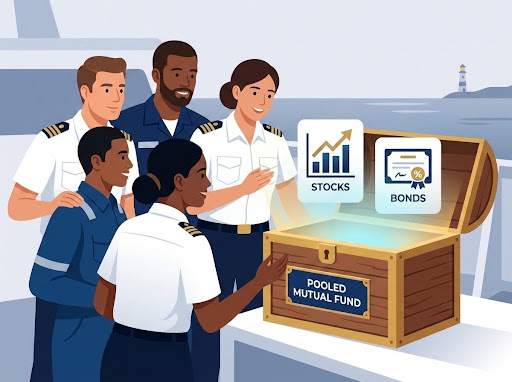
A mutual fund is an investment option where money from many investors is collected together and invested in assets like equities, bonds, government securities, and money market instruments. AMFI explains that mutual funds collect and pool money from investors and invest it in different securities. In simple words, you invest money in a fund, and professional fund managers manage that money according to the fund’s objective. For seafarers, mutual funds can be useful because they may not always have time to track markets daily while sailing.
Can Seafarers Start Mutual Funds on Their Own?
Yes, seafarers can start mutual funds on their own if they understand the basic process. Today, many mutual fund transactions can be done online through official platforms, mutual fund house websites, and industry platforms. But this does not mean you should click on any random link. The main rule is simple: use trusted platforms, verify details carefully, and never share OTPs, passwords, or documents with unknown people. Your money should be invested with understanding, not under pressure.
Why Seafarers Should Learn Before Investing
Before investing, every seafarer should remember one rule: learn first, invest next. Do not start only because a friend, relative, agent, or social media page recommended a fund. You should know why you are investing. Is it for retirement, children’s education, emergency planning, house purchase, or long-term wealth creation? The right fund depends on the goal. A short-term goal should not be treated like a long-term wealth goal. Emergency money should not be kept in a high-risk equity fund.
Mutual funds are market-linked products. AMFI clearly says mutual fund schemes are not guaranteed or assured return products, and investment in mutual fund units involves risks, including possible loss of principal.
Step 1: Decide Why You Want to Invest in Mutual Funds
The first step is not choosing the fund. The first step is choosing the goal.
Ask yourself:
Why am I investing this money?
Is it for my child’s education? Is it for retirement? Is it for buying a house? Is it for long-term wealth creation? Is it for short-term expenses?
Every goal needs a different plan. Money needed after 10 years can be invested differently from money needed after 6 months. If you do not know the goal, you may choose the wrong fund.
For seafarers, this is very important because salary may come during contract, but expenses continue even during leave. So your investment should match your real financial life.
Table of Contents
Step 2: Choose a Trusted Mutual Fund Platform
The next step is to choose a trusted platform. Do not use random links received on WhatsApp or Telegram. Do not enter your PAN, Aadhaar, bank details, or OTP on unknown websites.
Some commonly used routes include official mutual fund house websites, MF Central, MF Utility, and other recognised mutual fund transaction platforms. MF Central allows investors to view their mutual fund portfolio across different mutual funds on a single platform. MF Utility provides a Common Account Number facility that helps investors transact in multiple schemes of participating mutual funds through one platform.
For seafarers, safety is very important. You may be onboard, internet may be slow, and you may not have time to fix mistakes quickly. So always start from a trusted source.
Best Mutual Fund Platforms for Seafarers
There is no single best platform for every seafarer. The best platform is the one that is trusted, easy to use, secure, and suitable for your needs.
A seafarer can consider:
Official mutual fund house websites, where you invest directly with the fund house.
MF Central, where you can view mutual fund portfolio and access many portfolio-related services.
MF Utility, where a Common Account Number can help investors transact across participating mutual funds.
A trusted advisor or distributor, if you need guidance and are comfortable with the regular plan route.
Before using any platform, check the website/app carefully, avoid fake links, and never share sensitive information with unknown persons.
Direct Plan vs Regular Plan in Mutual Funds
Before investing, seafarers should understand the difference between direct plan and regular plan.
AMFI explains that direct plan and regular plan are part of the same mutual fund scheme, have the same portfolio, and are managed by the same fund manager, but they have different expense ratios. AMFI also states that direct plans have lower expense ratios because they exclude distribution expenses and commission. In simple words, direct plan is usually for investors who can invest on their own. Regular plan is usually through a distributor or advisor. If you need advice and handholding, a regular plan may be used. If you can research, understand, and manage your investment yourself, a direct plan may reduce cost.
Step 3: Complete KYC for Mutual Fund Investment
KYC means Know Your Customer. It verifies your identity, address, and investor details. AMFI states that KYC is a mandatory process to invest in mutual funds. For seafarers, KYC should be completed carefully. Your name, PAN, mobile number, email ID, address, bank details, and residential status should be correct. If your details are wrong, future transactions, redemption, communication, or tax-related records may become difficult.
Do not rush this step. KYC is the foundation of your mutual fund investment journey.
What Documents Are Required for Mutual Fund KYC?
For mutual fund KYC, you may need documents like PAN, Aadhaar, passport, address proof, bank details, and other information depending on the platform and applicable rules. AMFI explains that KYC establishes an investor’s identity and address through supporting documents such as PAN, Aadhaar, passport, and address proof.
Keep your documents ready before starting. If you are onboard, make sure your scanned copies are clear. Avoid uploading blurred documents. A small mistake can delay your KYC process.
KYC for NRI Seafarers Using NRE or NRO Account
Many seafarers may have NRE or NRO bank accounts depending on their residential status. Before investing, check which bank account you are using and whether the platform accepts it correctly. Your PAN, bank account, mobile number, email ID, and residential status should match properly. If you are not sure whether you should invest through NRE or NRO account, take proper guidance before investing. Do not guess in this step. Wrong bank mapping can create problems during redemption or future record keeping.
Step 4: Verify PAN, Bank Account, Mobile Number and Email
After KYC, the platform may ask you to verify PAN, bank account, mobile number, and email ID. Do not treat this as a formality. Your mobile number and email ID are important because OTPs, transaction alerts, statements, and important updates may come there. Your bank account is important because investments and redemptions are linked to it. One wrong digit in the bank account can create unnecessary delay. One wrong email ID can stop important communication. So take your time and check everything carefully.
Step 5: Add Nominee Details Before Investing
Nominee details are very important for seafarers. Since seafarers stay away from home for long periods, family members should not face difficulty later. Add nominee details properly. Keep your family informed about where your investments are held. Also keep your investment records organised. This does not mean sharing passwords carelessly. It means keeping your family financially aware. A responsible seafarer should not only invest, but also organise records properly.
Step 6: Choose the Right Mutual Fund Category
After KYC and platform setup, you need to choose the right mutual fund category. This is where many beginners make mistakes. Do not choose a fund only because it gave high returns last year. First understand the category. Equity funds may be suitable for long-term growth but can be volatile. Debt funds may be used for lower-risk goals but are not risk-free. Hybrid funds may give a mix of equity and debt. Index funds may provide simple market-linked exposure. The fund category should match your goal. If the money is needed soon, avoid high-risk equity funds. If the goal is long term, you can study equity or hybrid options according to your risk comfort.
Step 7: Check Risk Level Before Selecting a Fund
Before investing, always check the risk level of the fund. SEBI explains that the Riskometer is a tool used in the mutual fund industry to show the risk level of a mutual fund scheme, and asset management companies must display it. In simple words, Riskometer helps you understand whether the fund is low risk, moderate risk, high risk, or very high risk. For seafarers, this is very important. Do not invest in a very high-risk fund just because someone showed you high returns. Risk and return go together. You should be mentally ready for market ups and downs.
Step 8: Start SIP or Lump Sum Investment
After selecting the fund, you need to decide whether you want to invest through SIP or lump sum. SIP means investing a fixed amount regularly, usually every month. This can help build discipline. Lump sum means investing a larger amount at one time. For many seafarers, SIP can be a simple way to start because it builds habit slowly. Lump sum can also be used, especially after contract, but it needs more planning. Do not invest your full contract savings at once without keeping emergency money, family expenses, loan payments, and short-term needs separate.
SIP vs Lump Sum for Seafarers
SIP may suit seafarers who want to start small and invest regularly. It reduces the pressure of choosing one perfect day to invest. Lump sum may suit seafarers who receive a large amount after contract and have already separated emergency money and short-term expenses. The better option depends on your situation. A beginner seafarer can start with SIP, understand the process, and increase investment slowly. If you want to invest lump sum, do it only after proper planning and risk understanding.
Step 9: Read Details Before E-Sign and Submit
Before you e-sign and submit, read everything carefully. Check the fund name, plan type, option, SIP amount, lump sum amount, bank details, nominee details, risk level, and transaction date. Do not press submit in a hurry. For seafarers, this step is very important because you may not always be available on shore to correct mistakes quickly. One careless click can create confusion later. Read first. Confirm second. Submit last.
Step 10: Start Small and Increase Investment Slowly
You do not need to start with a big amount. A small SIP can help you understand the process and build confidence. Once you become comfortable, you can increase your investment according to your income, goals, and risk comfort. Do not start aggressively just because your salary is high during contract. Your investment should match your total financial situation. First protect your family, keep emergency money, manage loans, and then invest for future goals.
Common Mistakes Seafarers Should Avoid While Starting Mutual Funds
Many seafarers make mistakes in the beginning because they invest with excitement instead of understanding. Common mistakes include choosing funds from social media tips, investing without KYC clarity, ignoring risk level, selecting funds only by past returns, putting emergency money into equity funds, starting too many SIPs, not adding nominee details, and not keeping family informed. Another common mistake is depending blindly on someone else. Guidance is useful, but blind trust can be risky. Learn enough to ask the right questions.
Safety Tips for Seafarers While Investing Online
Always use trusted websites and apps. Do not click random investment links. Do not share OTPs, passwords, PAN copy, Aadhaar copy, or bank details with unknown people. Do not invest through screenshots or verbal promises. Check the website name carefully. Use secure internet whenever possible. Keep transaction records. Download account statements. Keep your mobile number and email ID updated. If someone promises guaranteed high returns from mutual funds, be careful. Mutual funds do not give guaranteed returns.
Simple Mutual Fund Starting Checklist for Seafarers
Before starting mutual funds, follow this simple checklist. Decide your goal. Keep emergency money separate. Complete KYC. Choose a trusted platform. Verify PAN, bank account, mobile number, and email ID. Add nominee details. Choose the right fund category. Check Riskometer. Understand SIP or lump sum. Read all details before e-signing. Start small. Review your investment from time to time. This simple checklist can help seafarers avoid random investing and start with confidence.
Final Advice on Starting Mutual Funds for Seafarers
Starting mutual funds is not as difficult as it looks. The process becomes simple when you follow the right order. Learn first, choose a trusted platform, complete KYC, verify your details, add nominee, select the right fund category, check risk, start SIP or lump sum carefully, and keep learning. Mutual funds can be useful for seafarers, but only when used with discipline. Do not invest in a hurry. Do not follow random advice. Do not ignore risk. Your investment journey does not have to start perfectly. It just has to start correctly.
Build Your Financial Confidence Before You Sail
For seafarers, mutual fund investing is not only about selecting one scheme. It is about understanding goals, knowing risks, protecting the future, and making disciplined financial decisions.
Download Sailor Pro app Built for Seafarers, an Initiative by Merchant Navy Decoded, to stay more organised and confident in your financial planning. You can also follow finance_for_seafarers on Instagram and join the WhatsApp channel Financial Management for Seafarer for practical money guidance created especially for seafarers.
Yes, seafarers can start mutual funds online through trusted platforms, official mutual fund house websites, and recognised mutual fund service platforms after completing KYC.
Yes, many NRI seafarers may invest using NRE or NRO accounts, depending on their residential status and platform rules. They should verify the correct bank account and details before investing.
There is no single best platform for everyone. Seafarers should use trusted platforms such as official fund house websites, MF Central, MF Utility, or a reliable advisor route depending on their comfort.
Direct plan may suit investors who can invest and review on their own. Regular plan may suit investors who need advice or support from a distributor or advisor.
Beginners can consider starting with SIP because it builds discipline slowly. Lump sum can be used after proper planning, especially when emergency money and short-term needs are already separated.
A seafarer can start with a small amount that is comfortable and sustainable. The amount can be increased later based on income, goals, and risk comfort.
Online mutual fund investing can be safe when done through trusted platforms. Avoid random links, never share OTPs or passwords, and always verify details before submitting.
Disclaimer :- The opinions expressed in this article belong solely to the author and may not necessarily reflect those of Merchant Navy Decoded. We cannot guarantee the accuracy of the information provided and disclaim any responsibility for it. Data and visuals used are sourced from publicly available information and may not be authenticated by any regulatory body. Reviews and comments appearing on our blogs represent the opinions of individuals and do not necessarily reflect the views of Merchant Navy Decoded. We are not responsible for any loss or damage resulting from reliance on these reviews or comments.
Reproduction, copying, sharing, or use of the article or images in any form is strictly prohibited without prior permission from both the author and Merchant Navy Decoded.