Hi this is Team Merchant Navy Decoded !!!

Please fill the below form with your query and we will get back to you in next 12 hours.

Rest assured your data is safe with us !!!🙂

Ask Your Query

How to Read a Pressure Gauge: A Complete Guide for Marine Engineers and Technicians

How to Read a Pressure

What Is a Pressure Gauge?

A pressure gauge is an instrument used to measure the pressure of fluids (liquids or gases) within a system. It indicates how much force the fluid is exerting per unit area inside pipes, tanks, or machinery.

Pressure gauges are commonly found in:

  • Boilers
  • Hydraulic systems
  • Fuel oil systems
  • Air compressors
  • Cooling water systems
  • Marine engines and auxiliary machinery

The emergency generator has its own emergency switchboard and is fitted with an independent starting arrangement. In most ships, it is arranged to start automatically when the main power supply is lost and must be capable of supplying the emergency services within 45 seconds.

Types of Pressure Gauges Used in Industry

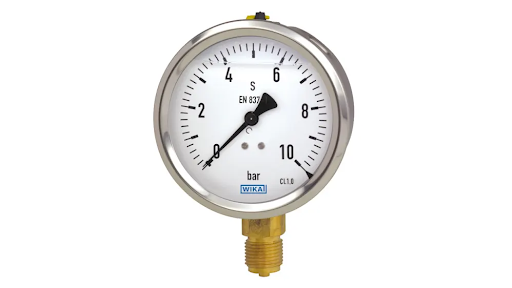
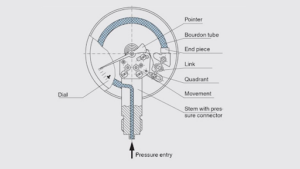
  • Bourdon Tube Pressure Gauge

Most common type used in marine and industrial systems.

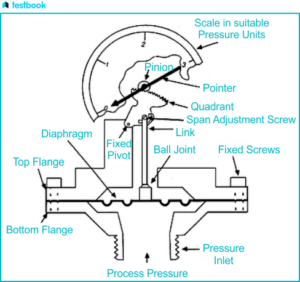
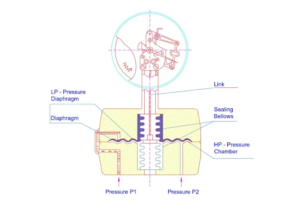
  • Diaphragm Pressure Gauge

Used for low-pressure applications.

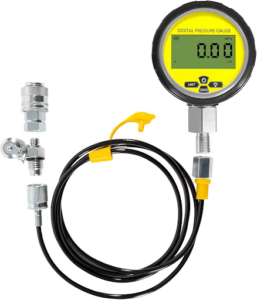
  • Digital Pressure Gauge


Provides precise readings and eliminates parallax error.

  • Differential Pressure Gauge

Measures pressure difference across filters or systems.


Table of Contents

Basic Components of a Pressure Gauge

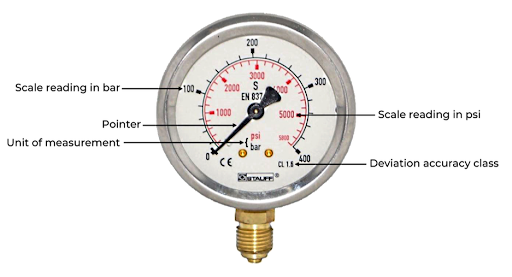
Before reading a gauge, it is important to understand its main parts:

  1. Dial (Face)

The circular display that shows pressure values. It contains markings and numbers representing pressure units.

  1. Pointer (Needle)

The needle moves across the dial to indicate the current pressure.

  1. Scale

The calibrated markings on the dial that represent pressure values.

  1. Units of Measurement

Pressure can be displayed in different units such as:

  • Bar
  • PSI (Pounds per Square Inch)
  • kPa (kilopascal)
  • MPa (megapascal)
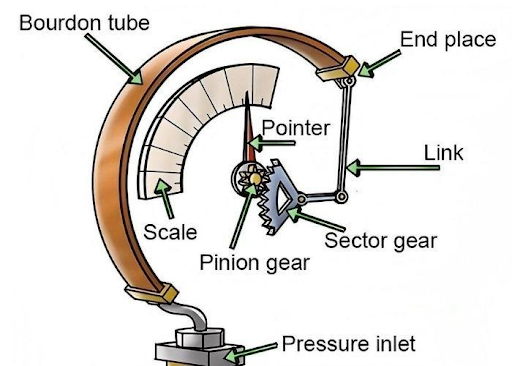
  1. Bourdon Tube (Internal Mechanism)

A curved metal tube inside the gauge that expands or contracts with pressure changes, causing the pointer to move.

Step-by-Step: How to Read a Pressure Gauge

Reading a pressure gauge correctly involves more than just looking at the needle. Follow these steps:

Step 1: Identify the Unit

Check whether the gauge is in bar, PSI, kPa, or MPa. Misreading units is a common mistake.

Step 2: Observe the Scale Range

Look at the minimum and maximum values on the dial. For example:

  • 0–10 bar
  • 0–300 PSI

This helps you understand the operating limits.

Step 3: Locate the Pointer Position

Observe where the needle is pointing on the scale.

Step 4: Estimate Between Markings

Most gauges have major and minor divisions. If the needle is between two numbers, estimate the value.

Example:

  • If the needle is halfway between 4 and 5 bar → reading is approximately 4.5 bar

Step 5: Check for Zero Error

Before taking readings, ensure the pointer rests at zero when no pressure is applied. If not, the gauge may be faulty.

Step 6: Compare with Normal Operating Range

Always compare the reading with the system’s normal operating pressure. This helps identify abnormalities.

Example of Reading a Pressure Gauge

Imagine a gauge with:

  • Range: 0–10 bar
  • Major markings: every 1 bar
  • Minor markings: every 0.2 bar

If the needle points between 6 and 7, slightly above the midpoint, the reading would be approximately 6.6 bar

Common Mistakes While Reading Pressure Gauges

Even experienced operators sometimes make errors. Avoid the following:

  • Ignoring Units

Confusing PSI with bar can lead to serious misinterpretation.

  • Parallax Error

Reading the gauge from an angle can give incorrect readings. Always read it straight-on.

  • Overlooking Calibration

Using an uncalibrated gauge can result in false readings.

  • Misreading Minor Divisions

Not paying attention to smaller markings leads to inaccurate estimates.

  • Ignoring Fluctuations

Rapid needle movement may indicate system instability.

Safety Considerations

Pressure gauges are directly linked to system safety. Always follow these precautions:

  • Never operate equipment beyond the gauge’s maximum range
  • Replace damaged or cracked gauges immediately
  • Ensure gauges are calibrated periodically
  • Avoid exposure to vibration and extreme temperatures
  • Use appropriate gauges for specific fluids (corrosive, high temperature, etc.)

Conclusion

Reading a pressure gauge may seem simple, but it requires attention to detail, understanding of units, and awareness of system conditions. For engineers especially marine engineers this skill is essential for safe and efficient operation of machinery.

A correctly interpreted pressure reading can prevent failures, improve performance, and ensure safety. On the other hand, a small mistake can lead to major consequences. Mastering pressure gauge reading is not just about knowing numbers it is about understanding the system behind those numbers.

Maintenance of Emergency Generator

Regular maintenance is essential because an emergency generator is only useful if it starts instantly when needed.

Important maintenance practices include:

  • Test run the emergency generator every Saturday
  • Keep the air bottle pressurized or starter battery fully charged
  • Change selector switch to local before starting for manual tests
  • Ensure the breaker is in the off position before starting
  • Check frequency, voltage, and current during testing
  • Maintain adequate fuel level in the tank
  • Clean the air filter regularly
  • Keep tools and spares in the emergency generator room
  • Check emergency lights regularly
  • Replace burnt-out bulbs immediately
  • Ensure batteries for emergency lights are fully charged

Routine testing proves the system is ready and also helps identify weaknesses before an actual emergency.

Conclusion

The emergency generator onboard ship is one of the most important systems in marine engineering. It provides backup power when the main electrical supply fails and ensures that the ship can maintain essential functions such as lighting, communication, navigation, steering, alarms, and fire-fighting support.

For a marine engineer, this system must never be treated casually. It must be tested, maintained, and inspected with the highest level of discipline. A properly functioning emergency generator can mean the difference between control and chaos during a blackout. In modern shipping, where safety and compliance are non-negotiable, the emergency generator remains a true lifeline at sea.

Disclaimer :- The opinions expressed in this article belong solely to the author and may not necessarily reflect those of Merchant Navy Decoded. We cannot guarantee the accuracy of the information provided and disclaim any responsibility for it. Data and visuals used are sourced from publicly available information and may not be authenticated by any regulatory body. Reviews and comments appearing on our blogs represent the opinions of individuals and do not necessarily reflect the views of Merchant Navy Decoded. We are not responsible for any loss or damage resulting from reliance on these reviews or comments.

Reproduction, copying, sharing, or use of the article or images in any form is strictly prohibited without prior permission from both the author and Merchant Navy Decoded.

DIWALI SALE

Decoded Discount Alert! up to 50% OFF

DIWALI SALE

Decoded Discount Alert! up to 50% OFF

Use Coupon Code Deep50

Days
Hours
Seconds
0
Would love your thoughts, please comment.x
()
x