Hi this is Team Merchant Navy Decoded !!!
Please fill the below form with your query and we will get back to you in next 12 hours.
Rest assured your data is safe with us !!!🙂
Ask Your Query| For Beginner | For Professional |
|---|---|
| GME | Engine Side |
| G.P. Rating | Deck Side |
| ETO | G.P. Rating |
| IMUCET & Sponsorship | Combo Offers |
| Free Course | MEO |
| Free Course |
| For Beginner | For Professional |
|---|---|
| GME | Engine Side |
| G.P. Rating | Deck Side |
| ETO | G.P. Rating |
| IMUCET & Sponsorship | Combo Offers |
| Free Course | MEO |
| Free Course |
Indian seafarers who qualify as NRIs may continue using credit cards issued by Indian banks, subject to the bank’s rules and KYC requirements. These cards can be useful for family expenses, online payments, travel bookings, insurance premiums, and purchases made while on leave in India. Using an Indian credit card is not automatically a tax issue. Problems usually arise when residential status is not updated, repayments come from unclear sources, large payments are not supported by income records, or transactions reported against PAN do not match the Income Tax Return.
Yes, eligible NRI seafarers can use Indian credit cards, subject to the issuing bank’s approval and internal policy. RBI guidance says Authorised Dealer banks are permitted to issue International Credit Cards to NRIs and PIOs without prior approval from the Reserve Bank. It also states that such transactions may be settled through inward remittance or balances held in the cardholder’s FCNR(B), NRE, or NRO accounts. This means becoming an NRI does not automatically require a seafarer to stop using every Indian credit card.
A seafarer should inform the bank after becoming a person resident outside India. The bank may request updated KYC documents such as passport, visa, CDC, employment contract, overseas address, PAN, and other supporting records. RBI’s non-resident account FAQ also says that when a resident Indian becomes a person resident outside India, the existing resident account should be designated as an NRO account. This is why bank account status and credit-card profile should be updated instead of continuing with old resident details.
NRI seafarers may generally pay Indian-issued credit card bills through eligible inward remittances or balances in NRE, NRO, or FCNR(B) accounts, subject to the bank’s process. RBI clarified that NRIs and PIOs could settle international credit card charges from inward remittances or NRE/FCNR balances, and later permitted settlement from NRO account funds as well. The simple money trail should be clear: income or savings, correct bank account, and then credit-card bill payment.
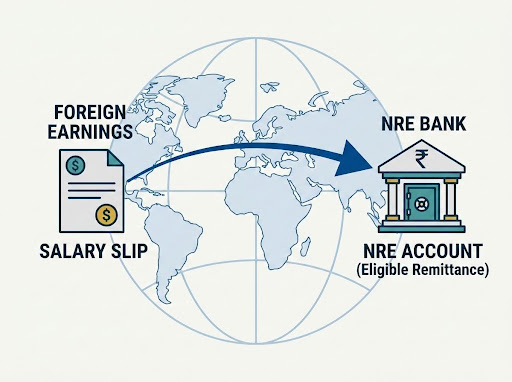
The source of repayment should match the nature of the money. Foreign salary remitted from abroad is commonly routed through an NRE account. Indian income such as rent, pension, dividends, or Indian interest is usually handled through an NRO account. FCNR deposits are held in foreign currency, so the bank may have its own process before using those funds for repayment. Seafarers should avoid mixing foreign salary, Indian income, and family transfers without clear records because this can create confusion during tax filing.
Credit card spending does not automatically become taxable income. Buying something with a credit card simply creates a repayment obligation. The amount spent is not added to taxable income merely because it was charged to the card. However, the source used to repay the bill should be explainable. A seafarer spending a large amount and paying from documented foreign salary is different from someone making repeated high-value repayments through unexplained cash deposits or unclear bank credits.
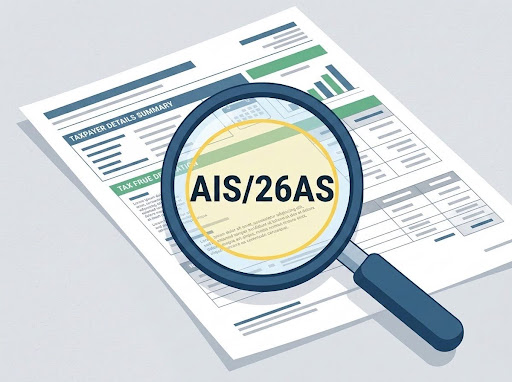
The money trail matters because the Income Tax Department may already have financial information reported against PAN. AIS is a statement that provides complete information about a taxpayer for a financial year, including income, financial transactions, tax details, TDS/TCS information, Specified Financial Transactions, tax payments, demand, refund, and other information. High credit-card spending is not automatically wrongdoing, but unclear repayment sources can create questions if financial information does not match the taxpayer’s declared income, savings, or exempt income records.
Credit-card issuers may report payments made against credit-card bills under the high-value transaction reporting framework. The Income Tax Department’s high-value transaction guidance says reporting applies when cash payment for one or more credit cards issued to a person is ₹1 lakh or more in a financial year, or payment in any mode other than cash is ₹10 lakh or more in a financial year. This reporting is about payments made against card bills, not just one purchase.
No, credit card reporting does not automatically mean taxable income. If a seafarer pays ₹10 lakh or more against credit-card bills through bank transfer, the card issuer may report qualifying payment information. This does not mean the ₹10 lakh becomes income. It only means the transaction may appear as financial information available to the Income Tax Department. The seafarer should be able to explain how the repayment was made through salary, savings, loan, gift, investment redemption, or other legitimate source.
Questions may arise when credit-card repayments are much higher than the income, savings, or exempt income visible in the taxpayer’s records. For example, large card repayments through cash or unexplained bank deposits can create doubt. Similar issues can arise when someone claims NRI status but continues using resident accounts without informing the bank. A high-value card payment does not prove tax evasion by itself, but the explanation should be supported with proper records.
If the Income Tax Department seeks clarification, taxpayers may need to use the Compliance Portal. The Income Tax portal explains that taxpayers may need to visit the Compliance Portal to respond to active e-Campaigns, e-Verification matters, e-Proceedings, and DIN authentication. This is why seafarers should not ignore financial information shown in AIS or any communication from the department. If something is wrong, duplicated, or not related to them, it should be reviewed and responded to properly.
Seafarers should preserve credit-card statements, bill payment confirmations, bank statements, and proof showing the account from which major card bills were paid. For foreign salary, useful records include employment contracts, salary slips, remittance advice, NRE account statements, passport stamps, CDC entries, sign-on and sign-off records, and sea service letters. For Indian income, useful records include NRO account statements, rent agreements, interest certificates, dividend statements, investment redemption records, and tax certificates. Good documentation makes repayment sources easier to explain.
If a seafarer pays credit-card bills using foreign salary, the records should clearly support the source. Keep salary slips, employment contract, remittance proof, and NRE bank statements. If money is first received abroad and then remitted to India, keep the remittance advice. If the credit card is paid from an Indian bank account funded by foreign earnings, the account trail should be clean. This helps show that the card repayment was supported by legitimate foreign earnings.

If a seafarer pays card bills using Indian income, those income records should also be clear. Rent from property, pension, dividends, Indian interest, investment redemptions, or other Indian income should be supported with documents. If the income is taxable in India, it should be considered properly during ITR filing. Seafarers should not assume that because they are NRI, every Indian income is tax-free. Indian-source income and credit-card repayments should be matched carefully before filing.
Cash repayment should be handled carefully. The high-value transaction rules specifically mention credit-card bill payments in cash of ₹1 lakh or more in a financial year as reportable by the card issuer. This does not mean cash payment is automatically wrong, but large cash repayments without a clear source can create questions. For seafarers, traceable banking channels are usually easier to explain than repeated cash payments from unclear sources.
Before filing ITR, seafarers should review AIS and Form 26AS. AIS may show financial transactions, tax details, TDS/TCS, SFT information, tax payments, demand, refund, and other reported data. Form 26AS should also be checked for tax credits such as TDS and TCS. Credit-card payments are generally relevant through financial reporting rather than as TDS entries, but both AIS and Form 26AS should be reviewed to prepare a clean tax record.
No, seafarers should not add credit-card spending as income merely because it appears as financial information. Spending and income are different. However, the source of repayment should be explainable. If the seafarer has exempt foreign salary, taxable Indian income, savings, loans, gifts, or investment redemptions, those sources should be documented properly. ITR should correctly report taxable income, eligible exempt income where applicable, and tax credits. If the financial activity is high, CA guidance is safer.
One common mistake is continuing to use old resident bank accounts after becoming non-resident without updating the bank. Another is paying large credit-card bills through unexplained cash deposits. Some seafarers mix foreign salary, Indian rent, family transfers, and investment income in one account. Others fail to update overseas address, ignore incorrect AIS information, discard card statements, or allow family members to make major transactions without keeping invoices. Usually, the card is not the issue; missing records are.
Seafarers should take CA help if credit-card payments are very high, AIS shows reported credit-card transactions, source of repayment is unclear, resident account status is not updated, or large repayments were made through cash. CA guidance is also useful if the seafarer has foreign salary, NRE and NRO accounts, Indian income, gifts, loans, investment redemptions, or residential status confusion. The goal is not to fear credit cards, but to keep the financial trail clean.
NRI seafarers can use Indian credit cards, subject to the issuing bank’s eligibility, KYC, and repayment rules. RBI permits Authorised Dealer banks to issue international credit cards to NRIs and PIOs without prior approval, and repayment may be made through eligible inward remittances or balances in FCNR(B), NRE, or NRO accounts. Use the correct account, update residential status, avoid unexplained cash repayments, keep records, and review AIS, Form 26AS, bank statements, and credit-card records before filing ITR.
Taxation planning for seafarers should not only be considered at the end of the year while filing the return. It should include proper assessment of residential position, NRI or resident status, Indian income, foreign income, NRE and NRO accounts, credit-card usage, tax records, and long-term financial planning. Download Sailor Pro App – Built for Seafarers, an Initiative by Merchant Navy Decoded, to stay more organised and confident in your financial planning.
Yes, eligible seafarers, including NRI seafarers, can use Indian credit cards subject to the issuing bank’s rules, KYC requirements, credit limit approval, and repayment conditions.
For eligible death cases occurring on or after 27 January 2026, the benefit can be up to ₹6,00,000, subject to official rules and eligibility.
Yes, NRI seafarers can use Indian credit cards if approved by the bank. RBI permits Authorised Dealer banks to issue international credit cards to NRIs and PIOs without prior approval from RBI.
Seafarers may generally pay Indian-issued credit card bills through eligible inward remittances or balances in NRE, NRO, or FCNR(B) accounts, subject to the bank’s process.
No, credit-card spending is not automatically taxable income. However, the source used to repay the bill should be explainable through salary, savings, loans, gifts, investment redemption, or other legitimate records.
Credit card bill payments may be reported when payments aggregate to ₹1 lakh or more in cash or ₹10 lakh or more through other modes in a financial year.
No, reporting does not automatically mean tax is payable. It only means the transaction may appear as financial information. The seafarer should be able to explain the repayment source.
Large cash repayments should be avoided unless the source is clear and documented. Credit-card bill payments in cash of ₹1 lakh or more in a financial year may be reported under high-value transaction rules.
Yes, seafarers should check AIS before filing ITR because AIS may show financial transactions reported against PAN, including certain high-value transactions.
Seafarers should keep credit-card statements, payment receipts, bank statements, salary slips, employment contracts, remittance advice, NRE/NRO account statements, passport records, CDC records, and major purchase invoices.
CA help is useful if credit-card payments are high, AIS shows transactions, repayment source is unclear, large cash payments were made, or the seafarer has NRI status, NRE/NRO accounts, Indian income, or tax filing confusion.
Disclaimer :- The opinions expressed in this article belong solely to the author and may not necessarily reflect those of Merchant Navy Decoded. We cannot guarantee the accuracy of the information provided and disclaim any responsibility for it. Data and visuals used are sourced from publicly available information and may not be authenticated by any regulatory body. Reviews and comments appearing on our blogs represent the opinions of individuals and do not necessarily reflect the views of Merchant Navy Decoded. We are not responsible for any loss or damage resulting from reliance on these reviews or comments.
Reproduction, copying, sharing, or use of the article or images in any form is strictly prohibited without prior permission from both the author and Merchant Navy Decoded.
Decoded Discount Alert! up to 50% OFF
Use Coupon Code Deep50