Hi this is Team Merchant Navy Decoded !!!

Please fill the below form with your query and we will get back to you in next 12 hours.

Rest assured your data is safe with us !!!🙂

Ask Your Query

Connecting Rod Bolt Replacement

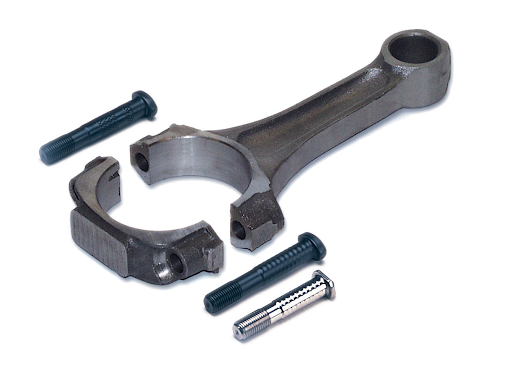
Connecting rod bolts are among the most critical fasteners in a marine diesel engine. These bolts secure the connecting rod cap to the crankshaft journal and are continuously subjected to extreme tensile and dynamic loads during engine operation. Due to these heavy stresses, connecting rod bolts stretch slightly during tightening and operation. Therefore, they must be carefully inspected after removal and replaced according to manufacturer limits, running hours, and condition assessment. 

Proper replacement and tightening of connecting rod bolts are essential for the safe and reliable operation of the engine.

Importance of Connecting Rod Bolts

The connecting rod transfers the piston’s reciprocating motion to the crankshaft. The bolts holding the connecting rod cap must withstand:

  • High combustion forces
  • Continuous vibration
  • Rotational stress
  • Thermal expansion

Failure of a connecting rod bolt can lead to:

  • Bearing damage
  • Crankshaft damage
  • Connecting rod failure
  • Complete engine breakdown

Hence, correct installation procedures must always be followed.


Table of Contents

Procedure for Connecting Rod Bolt Replacement

1. Prepare the Engine

  • Stop the engine and allow it to cool down.
  • Isolate starting air and electrical systems.
  • Drain lubricating oil if required.
  • Open crankcase doors for access.

2. Mark the Connecting Rod and Cap

Before removing the bolts, carefully mark:

  • Connecting rod number
  • Cap orientation
  • Direction of assembly

This ensures the rod and cap are reassembled in their original matching position, maintaining correct alignment and bearing clearance.

3. Remove Old Connecting Rod Bolts

  • Loosen the bolts gradually and evenly.
  • Remove the connecting rod cap carefully.
  • Inspect the old bolts for stretching, cracks, or thread damage.

Old bolts must never be reused because repeated stress weakens their strength.

4. Clean Components Thoroughly

Clean the following parts carefully:

  • Bolt holes
  • Bolt threads
  • Connecting rod surfaces
  • Bearing seating surfaces

Remove dirt, carbon deposits, and old lubricant to ensure proper tightening accuracy.

5. Inspect Bearings and Crank Pin

Inspect:

  • Crank pin bearing condition
  • Bearing clearance
  • Surface scoring or wear
  • Lubrication passages

Replace damaged bearings if necessary.

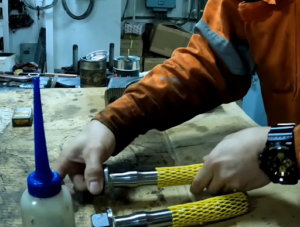
6. Lubricate New Bolts

Apply the manufacturer-recommended lubricant or assembly lube to:

  • Bolt threads
  • Under-head contact surfaces
  • Mating surfaces of the cap

Proper lubrication reduces friction and ensures accurate torque application.

7. Install New Connecting Rod Bolts

Fit the connecting rod cap in its original marked position and insert new bolts carefully. Tighten the bolts gradually in stages following the manufacturer’s tightening sequence.

8. Tighten According to Torque or Stretch Specifications

Use:

  • Torque wrench
  • Hydraulic tightening tool
  • Bolt stretch gauge (if required)

Some high-performance bolts require bolt stretch measurement instead of torque values for accurate tightening.

Strictly follow:

  • Torque values
  • Angle tightening procedures
  • Stretch specifications provided by the manufacturer

9. Check Crankshaft Rotation

After tightening:

  • Rotate the crankshaft manually.
  • Check for smooth movement and abnormal resistance.
  • Verify proper bearing clearance and alignment.

Any stiffness or unusual resistance may indicate incorrect assembly.

10. Final Inspection and Reassembly

  • Ensure all locking arrangements are secure.
  • Recheck bolt tightness.
  • Close crankcase doors.
  • Refill lubricating oil if drained.

The engine can then be prepared for operational testing.

Conclusion

Connecting rod bolt replacement is a critical maintenance procedure in marine diesel engines. Since these bolts operate under extreme stress, correct installation, lubrication, and tightening are essential for engine safety and reliability. Following proper replacement procedures helps prevent catastrophic engine failure and ensures smooth and efficient engine operation onboard ships.

Disclaimer :- The opinions expressed in this article belong solely to the author and may not necessarily reflect those of Merchant Navy Decoded. We cannot guarantee the accuracy of the information provided and disclaim any responsibility for it. Data and visuals used are sourced from publicly available information and may not be authenticated by any regulatory body. Reviews and comments appearing on our blogs represent the opinions of individuals and do not necessarily reflect the views of Merchant Navy Decoded. We are not responsible for any loss or damage resulting from reliance on these reviews or comments.

Reproduction, copying, sharing, or use of the article or images in any form is strictly prohibited without prior permission from both the author and Merchant Navy Decoded.

DIWALI SALE

Decoded Discount Alert! up to 50% OFF

DIWALI SALE

Decoded Discount Alert! up to 50% OFF

Use Coupon Code Deep50

Days
Hours
Seconds
0
Would love your thoughts, please comment.x
()
x