Hi this is Team Merchant Navy Decoded !!!

Please fill the below form with your query and we will get back to you in next 12 hours.

Rest assured your data is safe with us !!!🙂

Ask Your Query

Bilge Alarm Systems on Ships

Bilge alarm systems are essential safety and environmental protection devices installed on modern ships. They continuously monitor water accumulation in the lowest areas of a vessel, helping crews identify flooding risks, leakage issues, and pollution concerns before they escalate into serious incidents. These systems are required under international maritime regulations and play a vital role in vessel safety, operational reliability, and environmental compliance.

Understanding the Bilge

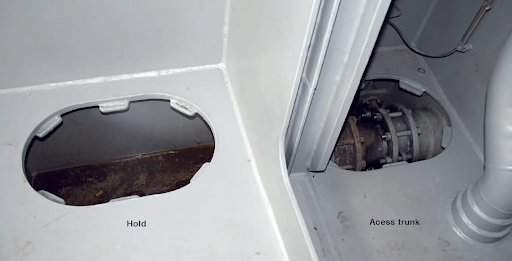
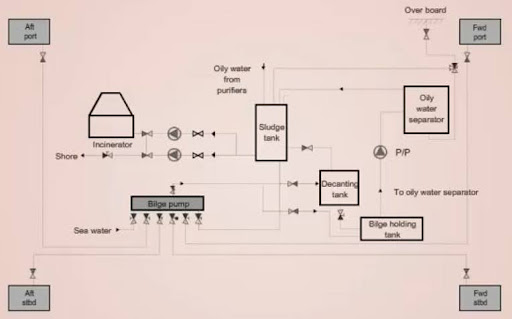
The bilge is the lowest internal part of a ship where liquids naturally collect. Water entering through machinery leakage, and operational activities eventually drains into this area. Because it serves as the vessel’s collection point for unwanted liquids, constant monitoring is necessary to prevent flooding and maintain safe operating conditions.

Table of Contents

Sources of Bilge Water

Bilge water can originate from weather conditions, hull penetrations, machinery leaks, condensation, deck washing operations, cargo handling activities, and structural movement during heavy seas. The resulting mixture often contains oil, chemicals, detergents, particles, and other contaminants that require monitoring and treatment before discharge.

Environmental and Safety Significance

Accumulated bilge water can threaten vessel safety and marine ecosystems. Excessive water levels may indicate flooding or structural issues, while contaminated bilge water can damage marine life if discharged improperly. International regulations therefore impose strict controls on bilge water management and disposal.

Bilge Alarm System Components

A typical bilge alarm arrangement consists of water level sensors, alarm units, data recording systems, and integration with shipboard control systems. Together, these components provide continuous monitoring and immediate notification when abnormal conditions arise.

Water Level Detection Technology

Water level monitoring is commonly achieved through float switches, electronic probes, ultrasonic sensors, pressure transmitters, or capacitive sensors. Multiple sensors are often installed at different heights to provide early warning and escalating alarm levels as water accumulation increases.

Float Switches

Float switches remain one of the most widely used technologies because of their simplicity and reliability. When rising water lifts the float to a predetermined level, the switch activates and triggers the alarm system.

The working of a float switch is based on the principle of buoyancy i.e., when there is no liquid in contact with the float, it floats on top of the liquid surface and triggers an alarm signal, when there is a sufficient amount of liquid in contact with float, it submerges itself into liquid and stops alarming. 

Electronic and Advanced Sensors

Electronic probes detect water through conductivity, while ultrasonic devices use reflected sound waves to determine liquid levels,pressure-based systems calculate water depth using hydrostatic pressure. These technologies provide enhanced monitoring accuracy and continuous measurement capabilities.

 Capacitance liquid level sensor

Capacitance level switches have two conductive electrodes, they are usually made of metal, in the circuit and the distance between them is very short.The circuit is complete when the electrode is immersed in the liquid.

Water level detection based on Pressure

water level sensor is that when the sensor is put into a certain depth in the liquid to be calculated, the pressure on the sensor’s front surface is converted into the water level height.  In short, a water sensor works by measuring the pressure on its surface when placed

 The formula is Ρ=ρ.g.H+Po,

where P is the pressure on the water surface of the sensor

ρ is the density of the water that is to be measured

Po is the atmospheric pressure on the water’s surface

g is the acceleration of gravity

H is the depth at which the sensor drops into the liquid.

 This pressure is then used to calculate the water level. The level sensor is a device designed to monitor and calculate liquid levels. When the liquid level is detected, the sensor converts the sensed data into an electrical signal that can be propagated and displayed.

Regulatory Framework

Bilge alarm installations are governed by international conventions, environmental regulations, and national maritime requirements. These rules establish standards for installation, performance, testing, and operational reliability.

SOLAS Requirements

Solas Regulation 48,Chapter II/1 establishes broad requirements for bilge alarm installations on international cargo vessels.These regulations specify minimum performance standards,installation locations and operational capabilities for bilge monitoring systems.

Solas Bilge Alarm Requirements:

1.Vessel Coverage:Cargo Ships 500 GT and above on international voyages

2.Installation locations:Machinery spaces and areas prone to water accumulation

3.Alarm capabilities:Audible and visual alerts at control positions

4.Power requirements:Independent power supply for emergency operation

5.Documentation:Operating and maintenance manuals onboard

Conclusion

Bilge alarm systems remain fundamental to maritime safety and environmental protection. By providing continuous monitoring of water accumulation and oil contamination, these systems help prevent flooding incidents, support regulatory compliance, and protect marine ecosystems. Proper installation, maintenance, and crew familiarity ensure that bilge alarm systems continue to perform their critical role throughout a vessel’s operational life.

Disclaimer :- The opinions expressed in this article belong solely to the author and may not necessarily reflect those of Merchant Navy Decoded. We cannot guarantee the accuracy of the information provided and disclaim any responsibility for it. Data and visuals used are sourced from publicly available information and may not be authenticated by any regulatory body. Reviews and comments appearing on our blogs represent the opinions of individuals and do not necessarily reflect the views of Merchant Navy Decoded. We are not responsible for any loss or damage resulting from reliance on these reviews or comments.

Reproduction, copying, sharing, or use of the article or images in any form is strictly prohibited without prior permission from both the author and Merchant Navy Decoded.

DIWALI SALE

Decoded Discount Alert! up to 50% OFF

DIWALI SALE

Decoded Discount Alert! up to 50% OFF

Use Coupon Code Deep50

Days
Hours
Seconds
0
Would love your thoughts, please comment.x
()
x