Hi this is Team Merchant Navy Decoded !!!

Please fill the below form with your query and we will get back to you in next 12 hours.

Rest assured your data is safe with us !!!🙂

Ask Your Query

Specific Cylinder Oil Consumption in Marine Engines

Specific Cylinder Oil Consumption

Introduction

The Specific Cylinder / lube Oil Consumption (SLOC) is an essential indicator of the engine’s lubrication regime. The consumption level should be controlled since cylinder oil, together with piston rings, reduces liner wear and increases engine performance. In most cases, this value should be determined by the cylinder oil’s properties, its quality and the engine’s operational mode.

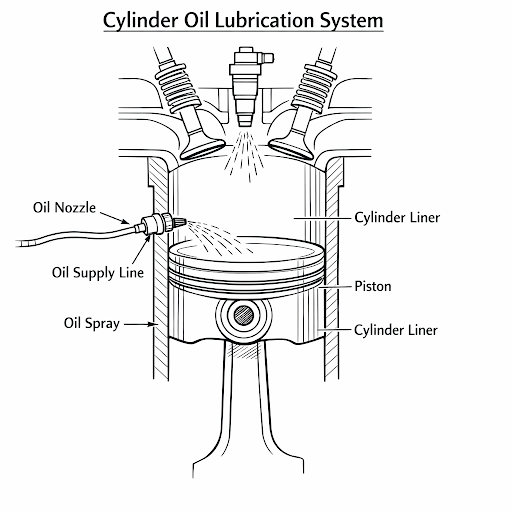
On large two-stroke marine diesel engines, cylinder oil consumption is usually higher than that in any other type of marine diesel engine. The reason is that cylinder oil is dosed and injected directly into the cylinder liner, while the crankcase is lubricated with a different type of oil. The former is used to form a film in place of the piston rings and cylinder liner contact, while the latter neutralizes the acidic components generated during fuel combustion.

What is Specific Cylinder Oil Consumption?

Cylinder Oil Consumption

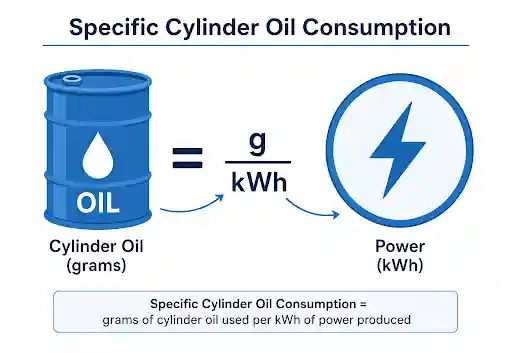
Specific Cylinder Oil Consumption is the quantity of cylinder oil consumed by an engine to produce a unit of power over a specific period.

It is generally expressed as:

SCOC = Cylinder Oil Consumption / Engine Power

The commonly used unit is g/kWh (grams per kilowatt-hour).

For example, if an engine consumes 100 kg of cylinder oil while producing a certain amount of power over a measured operating period, the consumption can be converted into g/kWh to compare the actual lubrication performance with the manufacturer’s recommended value.

SCOC is more useful than simply measuring the total quantity of oil consumed because the engine load changes during operation. A higher-powered engine naturally consumes more oil, so relating consumption to power provides a standardized measurement.

Importance of Cylinder Oil

Cylinder oil serves many functions in a marine diesel engine. Some of these include:

  • Lubricating the piston rings
  • Reducing friction and wear
  • Neutralizing acidic products formed
  • Prevents corrosion of the cylinder liner
  • Assists in maintaining a good piston ring seal
  • Prevent scuffing
  • Helps to preserve the cylinder liner and piston rings

The oil used must have properties suitable to the type of engine and fuel being used. The level of alkalinity often expressed as BN (Base Number) is of particular importance since it determines the ability of the oil to neutralize acidic products formed in combustion.

Table of Contents

Factors Affecting Specific Cylinder Oil Consumption

There are several operating and engine-related factors which affect the SCOC

  • Engine Load

The engine load has a big influence on the cylinder oil consumption. At different loads the lubrication requirement and oil distribution in the cylinder can change. Long time operation at very low load can have negative effects on the lubrication conditions and combustion.

Therefore the cylinder lubrication has to be adjusted according to the engine manufacturer and the actual operating conditions.

  • Fuel Sulphur Content

The sulphur content of the fuel affects the amount of acidic materials formed during combustion. Fuels with higher sulphur content will produce more sulphur oxides which in combination with water forms corrosive acids.

The cylinder oil BN and feed rate, therefore have to be selected according to the sulphur content of the fuel.

  • Cylinder Oil Feed Rate

The amount of oil supplied to each cylinder is another very important factor. Too low a feed rate will give insufficient lubrication resulting in increased wear and corrosion. Too high a feed rate will give excessive oil consumption and deposits together with risk of problems with the piston and exhaust parts due to excessive deposits.

Modern marine engines are fitted with electronically controlled cylinder lubrication systems which give the correct oil dosing according to the operating conditions.

  • Cylinder Liner Condition

The condition of the cylinder liner has a great influence on the oil consumption. Increased piston ring wear due to liner scoring or other damages, incorrect honing or incorrect liner temperature should give increased oil consumption.

Periodic check of the liner condition can reveal such problems at an early stage.

  • Piston Ring Condition

The piston rings are responsible for a proper gas seal and for distributing the lubricating oil evenly on the liner surface. Worn piston rings will lead to higher oil consumption and reduced gas seal resulting in blow by.

Periodic inspection of the piston rings during overhaul will help maintain a good cylinder lubrication and gas seal.

  • Engine Operating Condition

Incorrect combustion, poor fuel injection, excessive cylinder temperature or abnormal exhaust temperatures can influence cylinder lubrication. Operating the engine according to recommended parameters helps maintain stable combustion and lubrication conditions.

Measurement of Specific Cylinder Oil Consumption

SCOC can be determined by measuring the quantity of cylinder oil supplied to the engine and relating it to the engine’s power output over the same period.

A basic calculation is:

SCOC (g/kWh) = Oil consumed (g) ÷ Power produced (kWh)

For accurate monitoring, engineers should consider the measurement period, engine load, cylinder oil supply rate and power output.

Modern engines may use automated lubrication systems and monitoring equipment to record cylinder oil consumption and operating parameters. These records can be compared with recommended values to identify changes in engine condition.

Problems Due to Excessive Cylinder Oil Consumption

Excessive cylinder oil consumption does not necessarily mean better lubrication. Over-lubrication can result in:

  • Increased operating cost
  • Formation of deposits on piston crown and exhaust components
  • Increased risk of fouling
  • Higher cylinder oil storage requirements
  • Possible contamination of exhaust gas systems

Therefore, the objective is not simply to reduce oil consumption but to maintain the optimum cylinder oil feed rate required for reliable engine operation.

Problems Due to Low Cylinder Oil Consumption

If cylinder oil supply is insufficient, serious engine problems may develop. These can include:

  • Increased cylinder liner wear
  • Piston ring wear
  • Corrosive wear
  • Scuffing between piston rings and liner
  • Poor piston ring sealing
  • Increased blow by
  • Possible damage to engine components

For this reason, cylinder oil consumption should always be controlled within the limits recommended by the engine manufacturer.

Monitoring and Optimization

Marine engineers monitor SCOC together with other parameters such as:

  • Cylinder liner wear rate
  • Piston ring condition
  • Exhaust gas temperature
  • Cylinder pressure
  • Scavenge air condition
  • Drain oil analysis
  • Fuel sulphur content
  • Cylinder oil BN

Cylinder drain oil analysis is particularly useful because it can provide information about the condition of the cylinder lubrication system. The results can help engineers identify abnormal wear, excessive alkalinity or insufficient neutralization.

Modern engines can optimize cylinder lubrication through load dependent and electronically controlled lubrication systems. These systems adjust the amount and timing of oil injection to improve lubrication while avoiding unnecessary oil consumption.

Conclusion

Specific Cylinder Oil Consumption is an important indicator of the lubrication condition and operating efficiency of a marine diesel engine. It provides a standardized method of evaluating cylinder oil usage in relation to engine power output.

Maintaining the correct SCOC requires proper consideration of engine load, fuel sulphur content, cylinder oil properties, liner condition, piston ring condition and lubrication settings. Excessive lubrication can increase operating costs and deposits, while insufficient lubrication can lead to corrosion, wear and serious engine damage.

Therefore, the aim of marine engineers should be to maintain the optimum cylinder oil feed rate, supported by regular monitoring, drain oil analysis and inspection of engine components. Proper control of cylinder oil consumption helps improve engine reliability, reduce maintenance requirements and support efficient long term marine engine operation.

Frequently Asked Questions (FAQs)

Specific Cylinder Oil Consumption (SCOC) is the amount of cylinder oil consumed by a marine engine for producing a unit of power. It is commonly expressed in g/kWh.

Cylinder oil reduces friction and wear between the piston rings and cylinder liner. It also helps neutralize acidic products formed during fuel combustion and protects the liner against corrosion.

Insufficient cylinder oil can result in poor lubrication, increased liner and piston ring wear, corrosive wear, scuffing and possible damage to engine components.


Yes. Excessive cylinder oil can increase operating costs and may contribute to deposit formation on the piston and exhaust side components. Therefore, the oil feed rate should be maintained according to the manufacturer’s recommendations.

Engineers can monitor oil supply, engine power output, cylinder liner wear, piston ring condition and cylinder drain oil analysis. These parameters help determine whether the cylinder lubrication rate is appropriate.

Disclaimer :- The opinions expressed in this article belong solely to the author and may not necessarily reflect those of Merchant Navy Decoded. We cannot guarantee the accuracy of the information provided and disclaim any responsibility for it. Data and visuals used are sourced from publicly available information and may not be authenticated by any regulatory body. Reviews and comments appearing on our blogs represent the opinions of individuals and do not necessarily reflect the views of Merchant Navy Decoded. We are not responsible for any loss or damage resulting from reliance on these reviews or comments.

Reproduction, copying, sharing, or use of the article or images in any form is strictly prohibited without prior permission from both the author and Merchant Navy Decoded.

DIWALI SALE

Decoded Discount Alert! up to 50% OFF

DIWALI SALE

Decoded Discount Alert! up to 50% OFF

Use Coupon Code Deep50

Days
Hours
Seconds
0
Would love your thoughts, please comment.x
()
x