Hi this is Team Merchant Navy Decoded !!!
Please fill the below form with your query and we will get back to you in next 12 hours.
Rest assured your data is safe with us !!!🙂
Ask Your Query| For Beginner | For Professional |
|---|---|
| GME | Engine Side |
| G.P. Rating | Deck Side |
| ETO | G.P. Rating |
| IMUCET & Sponsorship | Combo Offers |
| Free Course | MEO |
| Free Course |
| For Beginner | For Professional |
|---|---|
| GME | Engine Side |
| G.P. Rating | Deck Side |
| ETO | G.P. Rating |
| IMUCET & Sponsorship | Combo Offers |
| Free Course | MEO |
| Free Course |
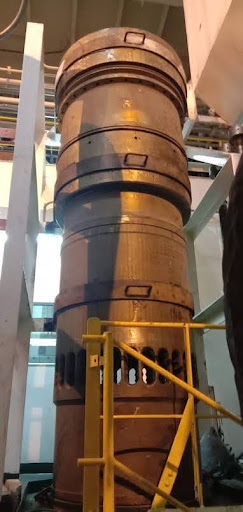
A cylinder liner and a piston ring are sliding against each other under enormous pressure and heat, thousands of times an hour, for years on end. Left completely dry, that relationship lasts about as long as you’d expect it to. Cylinder lubrication is what keeps it alive a thin, continuously renewed film of oil between ring and liner that does two jobs at once: It physically separates two moving metal surfaces that would otherwise grind each other apart, and it carries a base number strong enough to neutralise the acidic combustion products that sulphur in the fuel produces.
Get the timing or the quantity wrong in either direction, and you’re either wasting oil and money or accelerating exactly the wear the system exists to prevent.
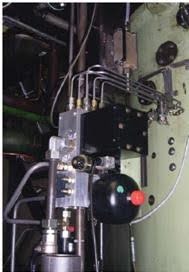
Modern engines don’t leave that balance to a fixed mechanical drip feed anymore. They run electronically controlled systems, the Alpha Lubricator being the one most people trained on MAN B&W engines will recognise that time and meter every single injection based on what the engine is actually doing at that instant. Worth going through properly: how the timing actually works, what happens if the control unit running it fails, and how the feed rate itself gets adjusted, both broadly and cylinder by cylinder.
The whole point of electronic timing is that oil gets injected exactly when it does the most good, rather than continuously or on some fixed mechanical schedule that has no idea what the piston is actually doing. A shaft encoder, fitted to the crankshaft (or, on engines where that’s not accessible, a trigger ring and pickups at the turning wheel instead) tells the control system precisely where each piston is in its stroke at any given moment. Using that position signal together with the engine’s speed and load, the system fires each cylinder’s lubricator at the point in the stroke where the piston rings are actually passing the lubrication quills not before, not after.
That timing isn’t fixed to once a revolution either. Depending on engine speed and load, injection can happen anywhere from roughly every couple of revolutions up to once every twenty or so more frequent, smaller doses at higher load and speed, further apart at low load, because the system is constantly recalculating what the cylinder actually needs rather than dosing on a flat schedule regardless of what’s happening. A marker signal, one pulse per revolution, keeps the whole thing synchronised, and if that signal ever looks abnormal, the system doesn’t just carry on blindly it falls back to a more conservative, less precisely timed lubrication pattern using whatever good signals remain, rather than guessing and potentially injecting at completely the wrong moment.
The control unit driving all of this commonly called the CCU, playing the same role as the MCU on the more established Alpha Lubricator architecture is doing genuinely critical, continuous work, and the system is built with the assumption that it might, at some point, actually fail. That’s not pessimism, it’s just good engineering: Lubrication can’t simply stop the moment the primary controller has a problem, because a few unlubricated minutes at running speed is exactly the kind of thing that scores a liner.
So there’s a backup layer sitting underneath the primary controller, watching over it. If the main control unit stops functioning correctly, an alarm fires immediately, and control shifts to the backup either automatically, or manually through a switchboard unit if the automatic handover doesn’t trigger the way it should. That backup runs off its own separate set of speed pickups, deliberately kept independent from the primary system’s sensors specifically so a single sensor fault can’t take down both the main and backup timing at once. The lubrication the backup delivers isn’t necessarily as finely tuned as what the primary CCU would have calculated; it’s often running on a simpler, fixed injection rate rather than the fully load-adaptive timing of normal operation but that’s a completely acceptable trade. The goal in a CCU failure isn’t perfect optimization. It’s making absolutely sure the cylinders never actually run dry while someone sorts out what’s actually wrong with the primary unit.
Once the fault’s been fixed, control has to be handed back deliberately; most systems don’t just quietly slip back to the primary controller on their own the instant it looks healthy again. Someone actually switches it back, generally after confirming the original problem is genuinely resolved and not just intermittently absent.
The basic feed rate covers the whole engine, but real cylinders don’t all wear identically, even sitting on the same crankshaft burning the same fuel. Bore polishing, slightly different scavenge airflow, minor variations in liner or ring condition from one unit to the next all of it means one cylinder might genuinely need more oil than its neighbours to stay properly protected, while another is running fine on less. That’s exactly what individual cylinder feed adjustment is for: on top of the basic engine-wide setting, each cylinder can be trimmed up or down on its own, through the same HMI panel, without touching the setting for any other unit.
This is also where load-change and mep-dependent lubrication functions come in the system can automatically add extra oil during a transient, like a load increase, when conditions briefly get harder on the liner than they are during steady running, rather than waiting for the average feed rate to catch up after the fact. Individual adjustment doesn’t replace the basic feed rate setting; it sits on top of it, giving each cylinder its own fine correction while the whole engine still shares the same underlying baseline tied to fuel sulphur content and cylinder oil BN.
Timing, backup control, and feed adjustment aren’t really three separate topics so much as three angles on the same underlying goal: getting the right amount of oil to the right place at the right moment, reliably, no matter what the engine is doing or what’s gone wrong elsewhere in the control chain. Perfect timing means nothing if the whole system goes dark the moment its controller has a fault. A correctly set basic feed rate means nothing if one cylinder that actually needs more oil than the rest is stuck getting exactly the same dose as everyone else. All three pieces have to work together, continuously, for cylinder lubrication to actually do its job over the life of the engine rather than just look good on a commissioning report.
Cylinder lubrication looks, from the outside, like a fairly simple job to get some oil between the ring and the liner. What’s actually running underneath a modern electronic system is considerably more considered than that: injection timed precisely to piston position using a shaft-mounted encoder, a genuine backup control layer standing by specifically for the day the primary controller fails, and a feed rate that’s adjustable both as an overall engine setting and cylinder by cylinder, tied directly to the fuel actually being burned. Understand those three pieces, and cylinder lubrication stops being a box that gets checked during rounds and becomes something you can genuinely reason about when a reading looks off or an alarm comes in.
A shaft encoder (or a trigger ring and pickups at the turning wheel on engines where the crankshaft end isn’t accessible) reports precise piston position to the control unit, which combines that with engine speed and load to fire each cylinder’s lubricator right as the piston rings pass the lubrication points, rather than on a fixed mechanical schedule.
An alarm activates and control shifts to a backup control layer, running off its own independent set of speed pickups, either automatically or manually via a switchboard unit. The backup may run a simpler, less finely tuned injection pattern than normal operation, but its job is to guarantee lubrication never actually stops while the fault with the primary unit is resolved.
Primarily the sulphur content of the fuel being burned and the base number of the cylinder oil in use, higher sulphur fuel produces more acidic combustion by-products, requiring a higher feed rate to maintain adequate neutralising capacity at the liner.
Because cylinders on the same engine don’t wear identical, differences in scavenge airflow, liner condition, or ring condition mean one cylinder may genuinely need more oil than another to stay properly protected. Individual cylinder adjustment allows each unit to be trimmed on top of the shared basic feed rate rather than forcing every cylinder to run on an identical setting.
The lower limit exists specifically to prevent the feed rate from being reduced far enough that liner protection becomes inadequate, even though reducing feed rate does lower cylinder oil consumption and cost; it’s a deliberate safeguard against chasing oil savings at the expense of wear protection.
Disclaimer :- The opinions expressed in this article belong solely to the author and may not necessarily reflect those of Merchant Navy Decoded. We cannot guarantee the accuracy of the information provided and disclaim any responsibility for it. Data and visuals used are sourced from publicly available information and may not be authenticated by any regulatory body. Reviews and comments appearing on our blogs represent the opinions of individuals and do not necessarily reflect the views of Merchant Navy Decoded. We are not responsible for any loss or damage resulting from reliance on these reviews or comments.
Reproduction, copying, sharing, or use of the article or images in any form is strictly prohibited without prior permission from both the author and Merchant Navy Decoded.
Decoded Discount Alert! up to 50% OFF
Use Coupon Code Deep50