Hi this is Team Merchant Navy Decoded !!!
Please fill the below form with your query and we will get back to you in next 12 hours.
Rest assured your data is safe with us !!!🙂
Ask Your Query| For Beginner | For Professional |
|---|---|
| GME | Engine Side |
| G.P. Rating | Deck Side |
| ETO | G.P. Rating |
| IMUCET & Sponsorship | Combo Offers |
| Free Course | MEO |
| Free Course |
| For Beginner | For Professional |
|---|---|
| GME | Engine Side |
| G.P. Rating | Deck Side |
| ETO | G.P. Rating |
| IMUCET & Sponsorship | Combo Offers |
| Free Course | MEO |
| Free Course |
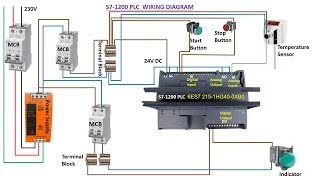
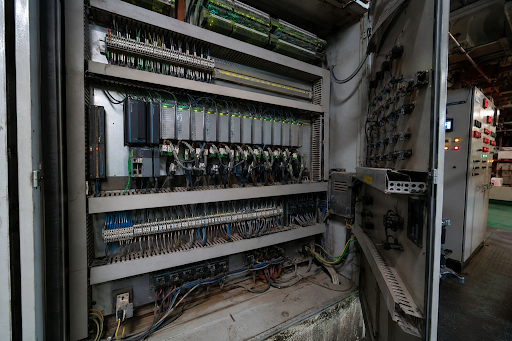
Every marine automation system- boiler water level control, generator auto-synchronising, alarm monitoring runs on a PLC or PLC-based controller somewhere in its architecture. That controller has exactly two jobs at its electrical boundary: Listen to the ship through input modules and act on the ship through output modules. A bilge float switch closing, a boiler pressure transmitter reporting a value, a fire damper solenoid releasing, a ballast pump contactor energising all of it passes through one of these two module types.
Understanding both halves of that boundary is what turns troubleshooting a shipboard automation fault into a fast, methodical process instead of guesswork.
Neither module type connects field-side wiring directly to the PLC’s processor. Field devices – Limit switches, pressure transmitters, solenoid valves, contactors operate at real-world voltages and currents that are neither clean nor safe near sensitive processor circuitry, and engine room electrical environments add moisture, vibration, and switching-induced voltage spikes into the mix. The component doing the actual isolation work, on both input and output modules, is typically an optocoupler: an LED on the field-wiring side and a phototransistor on the processor side, with no direct electrical connection between them. Field-side current or voltage lights the LED, light crosses a physical gap, and the phototransistor switches in response. The processor never sees field-side electrical conditions directly.
Quick pointer: Every channel’s status LED is your fastest diagnostic tool. A lit input LED with no logic response, or a lit output LED with the field device not responding, immediately tells you the fault is on the other side of that isolation boundary from where the module itself sits, saving you from chasing the wrong half of the circuit.
A digital input channel answers one question: is the field device open or closed? Aboard ship this covers bilge high-level float switches, watertight door position switches, fire damper limit switches, and generator breaker status contacts, typically wired into a 24V DC loop the standard across most marine automation.
Sourcing and sinking is the distinction that causes the most real wiring confusion, and it resurfaces every time a replacement sensor gets fitted during a breakdown. A sourcing sensor (PNP-type, common on proximity sensors for machinery like a turbocharger speed pickup) supplies current out and needs a sinking input module to accept it. A sinking sensor (NPN-type) needs the load to supply current to it, and needs a sourcing input module.
Before wiring in a spare sensor that isn’t an exact original part, confirm its output type matches the input channel; a mismatch simply won’t register, and can sometimes damage the device. AC input modules handle 110V/230V AC field devices still found on some older engine room equipment by first rectifying the AC to DC, then driving the same optocoupler isolation used on the DC side.
Where input modules just need to detect a signal, output modules need to actually switch real field devices, which is why three genuinely different technologies exist:
A relay output can usually substitute for either solid-state type in a pinch, since it handles both AC and DC, but a transistor output cannot switch AC, and a TRIAC cannot switch DC. Worth checking before wiring in whatever spare module is on hand in stores.
Flyback diodes matter specifically on the output side: solenoids and small relay coils are inductive loads that generate a voltage spike when switched off, and a flyback diode gives that spike a safe path to dissipate rather than letting it damage the output circuit.
Many shipboard parameters- boiler drum level, tank levels, cargo temperatures, exhaust gas temperature are continuous values, not simple states.
It isolates field-side wiring from the processor using light rather than a direct electrical connection; an LED on the field side switches a phototransistor on the processor side, protecting the processor from field-side voltage spikes and electrical noise.
It describes current flow direction relative to a device’s terminal. A sourcing (PNP) sensor needs a sinking input module; a sinking (NPN) sensor needs a sourcing input module. The same distinction applies to sourcing/sinking transistor output modules and the field devices they drive.
A 24V DC solenoid suits a transistor output for fast, wear-free switching. An alarm horn is often better served by a relay output, since it fails open (safe) on power loss and can handle whichever voltage type the horn circuit actually uses.
A current loop degrades far less over long cable runs than a voltage signal important on a ship where a transmitter in a tank or cargo space may be a long cable run from the engine room control system.
Not safely, without checking compatibility first. A relay output can generally substitute for either solid-state output type since it handles AC and DC, but a transistor output cannot switch AC and a TRIAC cannot switch DC and on the input side, a sourcing/sinking mismatch simply won’t register correctly.
Disclaimer :- The opinions expressed in this article belong solely to the author and may not necessarily reflect those of Merchant Navy Decoded. We cannot guarantee the accuracy of the information provided and disclaim any responsibility for it. Data and visuals used are sourced from publicly available information and may not be authenticated by any regulatory body. Reviews and comments appearing on our blogs represent the opinions of individuals and do not necessarily reflect the views of Merchant Navy Decoded. We are not responsible for any loss or damage resulting from reliance on these reviews or comments.
Reproduction, copying, sharing, or use of the article or images in any form is strictly prohibited without prior permission from both the author and Merchant Navy Decoded.
Decoded Discount Alert! up to 50% OFF
Use Coupon Code Deep50