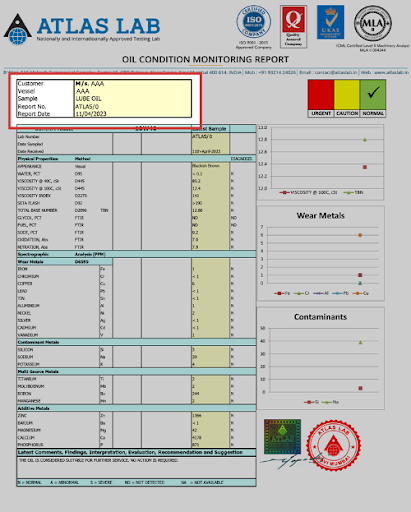
Lube oil is essential for reducing friction, removing heat, carrying contaminants and protecting the moving parts of marine machinery. A Lube Oil Analysis Report helps the ship’s engineering team identify wear, contamination, lubricant degradation and developing machinery problems before they become major failures.
For a merchant vessel, regular oil analysis supports condition-based maintenance and can reduce unplanned breakdowns, repair costs and off-hire time. Marine lubricant testing commonly includes viscosity, insolubles, flash point, TBN or TAN, water content and wear-metal analysis.
What Is a Lube Oil Analysis Report?
A Lube Oil Analysis Report is a laboratory assessment of a fresh or used lubricating-oil sample. The report compares the condition of the oil with the manufacturer’s limits, previous sample results and the normal operating condition of the equipment.
The report may contain:
Vessel name and IMO number.
Equipment or engine identification.
Oil type and grade.
Sampling date and running hours.
Laboratory report number.
Sample condition and appearance.
Test methods and measured values.
Wear-metal and contaminant results.
Trend analysis.
Recommendations such as “normal,” “monitor,” “caution” or “action required.”
A single report is useful, but a series of reports is more valuable. Trends often reveal a developing problem before the result reaches an absolute alarm limit.
Why Is Lube Oil Analysis Important?
Lube oil continuously circulates through bearings, gears, pistons, liners, camshafts, turbochargers, hydraulic systems and other components. During service, it can become contaminated by water, fuel, soot, dirt, coolant or metal particles.
Analysis can help detect:
Bearing and gear wear.
Cylinder liner and piston-ring wear.
Fuel dilution.
Water or seawater contamination.
Coolant leakage.
Oil oxidation and thermal degradation.
Excessive soot and insolubles.
Additive depletion.
Inadequate filtration or purification.
Abnormal machinery operation.
Oil analysis does not replace inspections, pressure checks, temperature monitoring or planned maintenance. It is a condition-monitoring tool that should be used together with engine-room observations and the manufacturer’s instructions.
Table of Contents
Main Parameters in the Report
Parameter
What it shows
Possible concern
Kinematic viscosity
Oil thickness and flow behaviour
Thickening from oxidation or soot, thinning from fuel dilution
Water content
Presence of fresh water or seawater
Corrosion, loss of lubrication and bearing damage
TBN
Remaining alkaline reserve
Reduced ability to neutralise acids
TAN
Acid formation in the oil
Oxidation, degradation or acidic contamination
Wear metals
Metal released from machinery components
Abnormal wear or component distress
Contaminant metals
Dirt, coolant or seawater-related contamination
Ingress through seals, filters or cooling systems
Insolubles and soot
Suspended solids and combustion products
Poor combustion, blow-by or filter problems
Flash point
Volatility and possible fuel contamination
Reduced flash point may indicate fuel dilution
Oxidation and nitration
Chemical ageing of the lubricant
High temperature, air exposure or combustion by-products
Additive elements
Condition of the oil’s additive package
Additive depletion or contamination
Viscosity
Viscosity is one of the most important properties of lubricating oil because it determines whether the oil can maintain an adequate film between moving surfaces. A significant increase may indicate oxidation, overheating, soot or insoluble contamination. A decrease may indicate fuel dilution, incorrect topping-up oil or mixing with a lower-viscosity product. The result should always be compared with the fresh-oil value and the equipment manufacturer’s limit. Viscosity changes should not be assessed in isolation.
Water Contamination
Water in lube oil reduces lubricating performance and can cause rust, corrosion, additive depletion, emulsification and bearing damage. Seawater contamination is especially serious because it introduces salt and may be associated with sodium and other elements.
Possible sources include:
Leaking cooler tubes.
Damaged shaft or pump seals.
Condensation in tanks.
Improper tank cleaning.
Leakage from steam or water systems.
Poorly closed inspection covers.
If water is detected, the crew should investigate the source, drain affected tanks where appropriate, operate the purifier correctly and take a follow-up sample after corrective action.
TBN and TAN
Total Base Number, or TBN, indicates the alkaline reserve remaining in the oil. This reserve helps neutralise acidic products formed during combustion and oil oxidation. A falling TBN may indicate that the oil’s protective additives are being consumed. Total Acid Number, or TAN, indicates the level of acidic substances in the lubricant. A rising TAN may suggest oxidation, thermal degradation or contamination. TBN and TAN should be interpreted according to the oil supplier’s recommendations, the engine type, fuel used and sampling trend.
Wear Metals
Wear-metal analysis is usually performed using elemental techniques such as ICP analysis. Typical elements include:
Iron from liners, gears, shafts or bearings.
Chromium from piston rings or plated surfaces.
Copper and lead from bearing materials.
Aluminium from pistons, bearings or components.
Tin from bearing alloys.
Nickel and vanadium from contamination or fuel-related sources.
An increase in one metal may be significant, but a pattern involving several metals is often more informative. For example, increasing iron and chromium may require investigation of piston-ring and liner condition, while rising copper and lead may indicate bearing distress. The result should be compared with previous reports, running hours, engine load and recent maintenance history. A sudden increase is usually more important than a consistently low value.
Fuel Dilution
Fuel contamination reduces the viscosity and flash point of lube oil. It may occur because of leaking fuel injectors, defective fuel pumps, poor combustion, blow-by or incorrect operating conditions. Fuel dilution can weaken the oil film and increase the risk of wear. If suspected, engineers should check injectors, fuel pumps, crankcase condition, viscosity and flash point, and should follow the engine maker’s instructions regarding oil renewal.
Soot and Insolubles
Soot and insolubles may enter the crankcase oil because of combustion blow-by, poor injector performance, incorrect fuel injection, worn piston rings or inadequate filtration. Excessive soot can increase viscosity, block filters and reduce the oil’s ability to lubricate effectively. The engineering team should correlate the result with scavenge inspections, exhaust temperatures, cylinder condition, purifier performance and filter differential pressure.
How to Take a Good Sample
The reliability of the report depends heavily on sample quality. A contaminated container or a poorly selected sampling point can produce misleading results.
Good practice includes:
Use a clean, dry sample bottle approved by the laboratory.
Take the sample from a representative circulating-oil point.
Avoid sampling from the bottom of a drain tank unless contamination at that location is being investigated.
Flush the sampling line before collecting the final sample.
Avoid taking the sample immediately after adding new oil unless specifically required.
Record equipment hours, oil hours, oil grade and recent maintenance.
Label the bottle clearly.
Send the sample promptly to a recognised laboratory.
The sample form should include the engine or machinery identification, oil type, operating hours, oil-change date, recent topping-up quantity and any observed abnormality.
Laboratories commonly classify results using terms such as:
Normal: No significant abnormality detected.
Monitor: A minor change is present; continue trend monitoring.
Caution: Investigation or corrective action is recommended.
Action required: Immediate inspection or oil-system intervention may be necessary.
A “normal” report does not guarantee that the machinery is free from defects. Similarly, a “caution” result does not always mean that the equipment must be stopped immediately. The correct response depends on the severity of the result, the trend, machinery alarms and the manufacturer’s limits.
Actions for the Chief Engineer
When a report is received, the Chief Engineer should:
Compare the result with earlier reports.
Check the oil grade and sample identity.
Review viscosity, water, TBN or TAN and wear metals first.
Investigate any sudden increase in wear elements.
Check filters, purifiers, coolers and seals.
Inspect fuel injectors and piston-ring condition if fuel dilution or soot is high.
Take a confirmation sample after corrective action.
Inform the superintendent when results indicate serious or increasing deterioration.
Record actions taken in the engine-room log and planned-maintenance system.
The purpose of analysis is not simply to decide whether to change the oil. It is to understand why the oil condition has changed and whether the machinery is contributing to that change.
The frequency depends on the engine maker, oil supplier, company procedures, machinery type and operating hours. Many vessels follow a routine sampling schedule, with additional samples taken after an overhaul, suspected contamination, abnormal readings or a major change in operating condition.
High iron may indicate abnormal wear from cylinder liners, piston rings, gears, shafts, bearings or other steel components. The result must be compared with previous trends and supported by inspections, temperature readings and other wear-metal results.
Falling TBN means that the oil’s alkaline reserve is being consumed. It may indicate exposure to acidic combustion products or oil degradation. The result should be assessed against the oil supplier’s limit, engine type, fuel used and previous analysis results.
The answer depends on the amount and source of contamination, the machinery involved and the manufacturer’s guidance. The crew should investigate the source, remove water through draining or purification where suitable, and carry out a follow-up analysis before deciding whether the oil can remain in service.
No. Oil analysis is a condition-monitoring method, not a replacement for planned maintenance or physical inspection. It should be evaluated together with engine alarms, temperatures, pressures, filter condition, purifier performance, vibration data and inspection findings.
Disclaimer :- The opinions expressed in this article belong solely to the author and may not necessarily reflect those of Merchant Navy Decoded. We cannot guarantee the accuracy of the information provided and disclaim any responsibility for it. Data and visuals used are sourced from publicly available information and may not be authenticated by any regulatory body. Reviews and comments appearing on our blogs represent the opinions of individuals and do not necessarily reflect the views of Merchant Navy Decoded. We are not responsible for any loss or damage resulting from reliance on these reviews or comments.
Reproduction, copying, sharing, or use of the article or images in any form is strictly prohibited without prior permission from both the author and Merchant Navy Decoded.