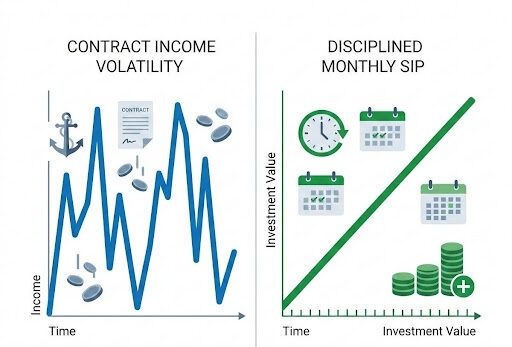
Many seafarers earn well during contracts, but long-term investing often gets delayed. Salary comes into the account, family expenses start, plans are made, and investing slowly becomes “I will start later.” This happens because seafarers may not always have a regular monthly salary cycle like shore-based employees. Income may be strong during contract, but there can be gaps between contracts. This is where SIP can become useful. SIP helps seafarers invest regularly, build discipline, and slowly work toward long-term financial goals without waiting for the perfect time.
What is SIP in Mutual Fund for Seafarers?
SIP means Systematic Investment Plan. It is a method of investing a fixed amount regularly in a mutual fund scheme. AMFI explains that SIP is an investment plan offered by mutual funds where an investor can invest a fixed amount periodically, such as once a month, instead of making a lump-sum investment. The SIP instalment can be as low as ₹500 per month in many cases. In simple words, SIP helps seafarers invest step by step instead of waiting to invest a large amount at once.
How Does SIP Work for Seafarers?
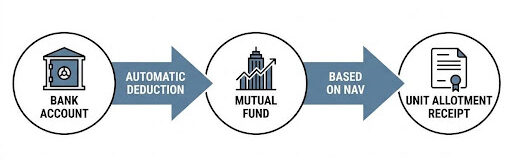
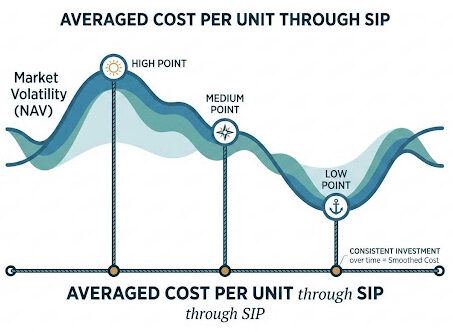
In SIP, a fixed amount is invested at regular intervals into a selected mutual fund scheme. This can usually be monthly, and the amount is deducted automatically if proper bank instructions are set. The mutual fund then allots units based on the Net Asset Value of the scheme on the investment date. For seafarers, this can be helpful because the investment process becomes automatic and disciplined. Instead of deciding every month whether to invest or not, SIP creates a routine that continues quietly in the background.
Why SIP is Good for Seafarers With Contract-Based Income
Seafarers may earn well during contracts, but their income pattern can be different from a normal office employee. There can be months of strong income and then a gap between contracts. At the same time, household expenses, children’s education, medical needs, travel, documents, and family responsibilities continue. SIP helps create a disciplined investing habit. Instead of spending first and investing whatever is left, SIP encourages the habit of investing first. This small shift can make a big difference over many years.
SIP vs Lump Sum for Seafarers
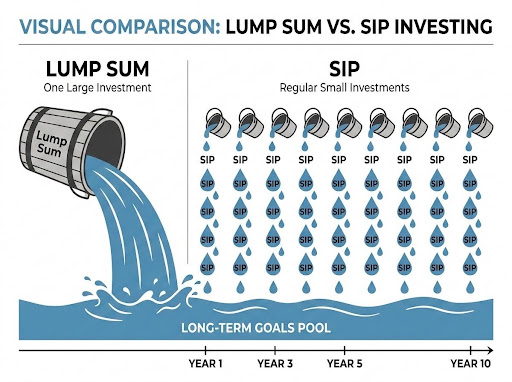
Many seafarers ask whether SIP is better or lump sum investment is better. Lump sum means investing a large amount at one time. SIP means investing smaller amounts regularly over time. Lump sum may work when a seafarer has a clear plan, understands market risk, and is comfortable investing a larger amount together. SIP can feel easier for beginners because it does not require one big decision. It spreads the investment across time and helps the seafarer stay consistent without waiting for the perfect market level.
Is SIP Better Than Lump Sum for Seafarers?
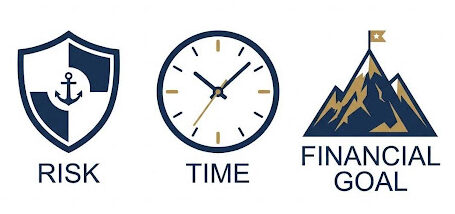
SIP and lump sum are both investment methods, and one is not always better than the other. The better choice depends on the seafarer’s income pattern, financial goals, risk comfort, and market understanding. For many beginner seafarers, SIP may be easier because it builds discipline and reduces the stress of investing a large amount at once. For seafarers who receive a large contract payout, lump sum investing may also be considered, but only after proper planning, emergency fund preparation, and understanding of market risk.
How SIP Helps Seafarers Avoid Market Timing
One of the biggest reasons people delay investing is the fear of market timing. When the market is high, they think it may fall. When the market falls, they think it may fall further. Because of this, they keep waiting and never start. SIP helps reduce this pressure because the investment continues across different market levels. A seafarer does not need to predict the perfect day to invest every month. This is useful because onboard life already has enough responsibilities, and tracking market movements daily may not be practical.
Why Seafarers Should Start SIP Early
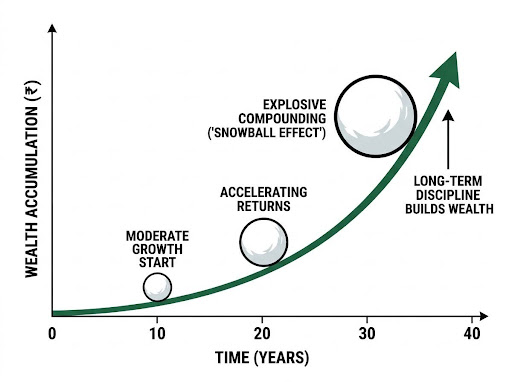
Starting early can give seafarers a strong advantage. Many seafarers begin earning at a young age, and this can become powerful if investing starts early. Even a small SIP can grow over time when given enough years. The important point is not only the amount invested, but also the time available for growth. A cadet, junior engineer, junior officer, or rating who starts early may benefit more from long-term discipline than someone who waits for many years and tries to invest a larger amount later.
How Compounding Works in SIP for Seafarers
Compounding means your money earns returns, and over time, those returns can also start earning returns. In the beginning, the growth may look slow. But when SIP continues for many years, the effect of compounding can become stronger. For seafarers, this is an important lesson because wealth does not always come from one big investment. It often comes from regular investing, patience, and time. SIP gives structure to this process by helping money move regularly toward long-term goals.
Small SIP or Big SIP: What Should Seafarers Choose?
A seafarer does not need to start with a very large SIP. Starting with a comfortable amount is better than waiting for a perfect amount. A small SIP that continues regularly can be better than a big plan that never starts. The SIP amount should depend on income, family responsibilities, emergency fund, existing loans, insurance needs, and financial goals. As income increases or financial stability improves, the SIP amount can be reviewed and increased. The main goal in the beginning is to build the habit.
Is SIP Risk-Free for Seafarers?
No, SIP is not risk-free. SIP is only a method of investing; it does not remove the risk of the mutual fund scheme. AMFI clearly states that mutual fund schemes are not guaranteed or assured return products, and investment in mutual fund units involves risks, including possible loss of principal. This means SIP should not be treated like a fixed deposit. The risk depends on the type of mutual fund selected, market conditions, investment period, and the investor’s risk capacity.
Does SIP Give Guaranteed Returns for Seafarers?
SIP does not give guaranteed returns. Returns depend on the mutual fund scheme, market performance, investment period, asset category, and overall economic conditions. AMFI also states that a mutual fund scheme is not a deposit product and is not guaranteed, insured, or an obligation of the mutual fund or AMC. Seafarers should not start SIP only because someone promised high returns. The right approach is to understand the scheme, risk level, time horizon, and goal before investing.
Which Mutual Fund is Best for SIP for Seafarers?
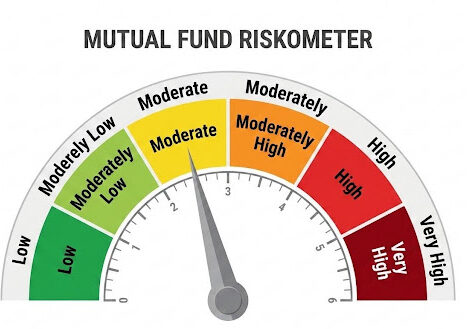
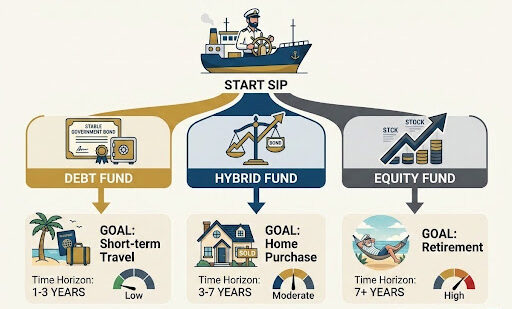
There is no single mutual fund that is best for every seafarer. The best fund depends on the goal, time period, risk appetite, and financial situation. Money needed in one year should not be invested the same way as retirement money needed after twenty years. Before choosing a fund, seafarers should check the scheme objective, risk level, expense ratio, exit load, fund category, and investment horizon. SEBI’s investor website explains that the Riskometer shows the risk level of a mutual fund scheme, ranging from low to very high.
Can NRI Seafarers Invest in SIP in India?
Many seafarers may qualify as non-resident for tax or banking purposes in certain years, depending on their stay and other conditions. Eligible NRI investors can invest in Indian mutual funds subject to applicable rules, KYC, bank account requirements, and platform policies. SEBI investor education material states that an NRI having an NRE or NRO bank account can invest in Indian mutual funds after completing KYC, on repatriable or non-repatriable basis. Seafarers should check residential status, bank account type, FATCA details, and tax impact before starting SIP.
KYC Required for SIP for Seafarers
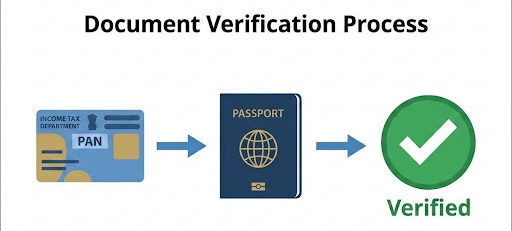
KYC is required before investing in mutual funds. AMFI explains that Know Your Customer is a mandatory process to invest in mutual funds and helps ensure compliance and security in the securities market. For seafarers, this means PAN, identity proof, address proof, bank details, FATCA declaration, and nominee details should be updated properly. Since seafarers travel frequently and may have limited access to documents onboard, it is better to complete KYC and organize financial records before joining a vessel.
Emergency Fund Before Starting SIP for Seafarers
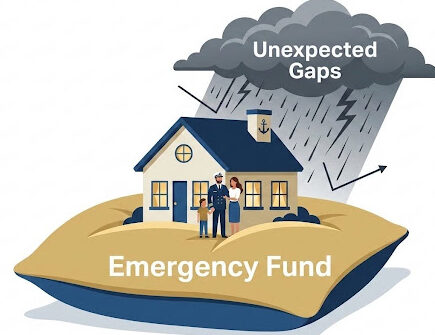
Before starting SIP aggressively, seafarers should first create an emergency fund. This fund should be safe, liquid, and easily accessible. Seafarers may face contract gaps, sudden medical needs, family emergencies, urgent travel, document renewal, or course-related expenses. If all money is invested in market-linked products, the seafarer may be forced to withdraw during a bad market phase. Emergency money is not meant for high returns. It is meant to protect the family and reduce stress during uncertain periods.
Insurance Before SIP for Seafarers
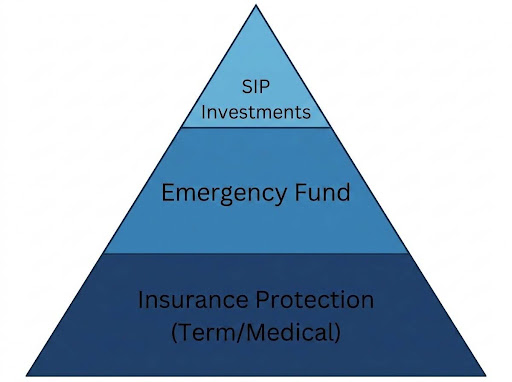
SIP is for investment, but insurance is for protection. Seafarers should not confuse the two. If family members depend on the seafarer’s income, proper insurance planning becomes important before aggressive investing. Term insurance, medical insurance, and emergency planning should be reviewed separately. SIP can help build long-term wealth, but it cannot replace protection. A strong financial plan should first protect the family, then create emergency savings, and then invest for future goals through suitable products.
How Much SIP Should Seafarers Start With?
There is no fixed SIP amount that is correct for every seafarer. The amount should depend on monthly expenses, family responsibilities, income level, contract pattern, existing savings, loans, emergency fund, and financial goals. A beginner seafarer can start small and increase gradually. The most important thing is consistency. A small SIP that continues for years can be more powerful than a large SIP that stops after a few months. The goal is to build a habit first and then increase the amount with planning.
Best Financial Goals for SIP Investment for Seafarers
SIP can be used for long-term goals such as retirement planning, children’s education, home purchase planning, family security, wealth creation, and life after sailing. Every goal should have a time period. Short-term goals need safer planning, while long-term goals may allow more market-linked investment depending on risk comfort. Seafarers should avoid starting SIP without knowing the purpose. When the goal is clear, the fund selection, amount, and time horizon become easier to decide.
Should Seafarers Stop SIP When Market Falls?
Many investors panic when the market falls and stop their SIP. This can be a mistake if the investment goal is long-term and the fund is suitable. Market ups and downs are part of market-linked investing. SIP is designed to continue across different market levels. However, this does not mean every SIP should continue blindly forever. Seafarers should review the fund periodically, but they should not stop only because of temporary market fear. Long-term investing needs patience and discipline.
SIP for Seafarers Who Cannot Track the Market Daily
SIP can be useful for seafarers who cannot follow the market every day. Onboard responsibilities, watchkeeping, inspections, limited connectivity, and rest hours make daily market tracking difficult. SIP allows investing to continue without requiring constant decisions. This does not mean the seafarer can ignore investments completely. The portfolio should still be reviewed occasionally. But SIP reduces the pressure of watching every market movement and helps maintain a disciplined investment routine even during sailing.
Common SIP Mistakes Seafarers Should Avoid
Seafarers should avoid starting SIP only by looking at past returns. They should not choose a fund only because a friend or social media video recommended it. They should not invest emergency money in high-risk funds. They should not stop SIP every time the market falls. They should not start too many SIPs without a clear goal. They should also avoid ignoring nominee details, KYC updates, tax impact, and account type. SIP works best when it is planned, reviewed, and connected to real goals.
Simple SIP Plan for Seafarers
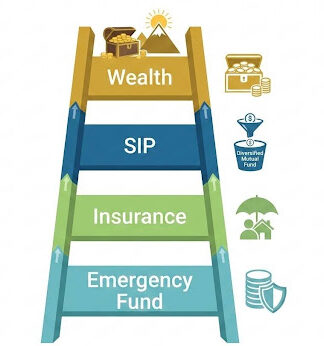
A simple SIP plan can begin with emergency fund creation. After that, insurance protection should be reviewed. Then the seafarer can identify goals such as retirement, children’s education, house planning, or wealth creation. Next, the SIP amount can be selected based on income and comfort. The fund should be selected based on risk level and time horizon. The SIP should be reviewed from time to time, but not disturbed unnecessarily. This simple structure can help seafarers build disciplined financial habits.
Table of Contents
Final Advice on SIP for Seafarers
SIP is not magic. SIP is discipline. It does not guarantee returns, and it does not remove market risk. But it can help seafarers build a regular investment habit, avoid waiting for perfect timing, and use time and compounding for long-term goals. Seafarers already understand discipline in their professional life. The same discipline can be applied to money. Start with a suitable amount, understand the risk, choose funds carefully, stay consistent, and give your investment enough time to grow.
Plan Your Money Better at Sea
For seafarers, mutual fund investing is not only about selecting one scheme. It is about understanding goals, managing risk, protecting family, and making disciplined financial decisions. Download Sailor Pro app Built for Seafarers, an Initiative by Merchant Navy Decoded, to stay more organised and confident in your financial planning. You can also follow finance_for_seafarers on Instagram and join the WhatsApp channel Financial Management for Seafarer for practical money guidance created especially for seafarers.
SIP is a method of investing a fixed amount regularly in a mutual fund scheme. It helps seafarers invest with discipline instead of waiting to invest a large amount at once.
SIP can be useful for seafarers because it builds regular investment discipline, reduces the stress of market timing, and supports long-term financial goals.
Eligible NRI seafarers may invest in Indian mutual funds through NRE or NRO accounts after completing KYC, subject to applicable rules and platform policies.
SIP may be easier for beginner seafarers because it spreads investment over time and builds discipline. Lump sum may also be used if the seafarer has a clear plan and understands market risk.
Seafarers should not stop SIP only because the market falls, especially if the goal is long-term and the fund remains suitable. However, periodic review is important.
Starting early gives more time for compounding. Even a small SIP started early can become powerful over many years if continued with discipline.
Disclaimer :- The opinions expressed in this article belong solely to the author and may not necessarily reflect those of Merchant Navy Decoded. We cannot guarantee the accuracy of the information provided and disclaim any responsibility for it. Data and visuals used are sourced from publicly available information and may not be authenticated by any regulatory body. Reviews and comments appearing on our blogs represent the opinions of individuals and do not necessarily reflect the views of Merchant Navy Decoded. We are not responsible for any loss or damage resulting from reliance on these reviews or comments.
Reproduction, copying, sharing, or use of the article or images in any form is strictly prohibited without prior permission from both the author and Merchant Navy Decoded.