Hi this is Team Merchant Navy Decoded !!!
Please fill the below form with your query and we will get back to you in next 12 hours.
Rest assured your data is safe with us !!!🙂
Ask Your Query| For Beginner | For Professional |
|---|---|
| GME | Engine Side |
| G.P. Rating | Deck Side |
| ETO | G.P. Rating |
| IMUCET & Sponsorship | Combo Offers |
| Free Course | MEO |
| Free Course |
| For Beginner | For Professional |
|---|---|
| GME | Engine Side |
| G.P. Rating | Deck Side |
| ETO | G.P. Rating |
| IMUCET & Sponsorship | Combo Offers |
| Free Course | MEO |
| Free Course |
Refrigeration and air conditioning are essential functions on board a ship to provide the necessary cooling and storage of food, the required temperature and humidity of the living compartments and the temperature maintenance of the cargo hold. At the same time, since such systems work in a closed loop, involving the circulation of gas under pressure, a decrease in the level of pressure due to possible gas leakage leads to their inefficient operation, resulting in extra fuel consumption and potential dangers to the crew.
For this reason, the control of gas leakage on board is a critical process that requires special attention.

It occurs due to the leakage of the refrigerant gas from a closed refrigeration or air conditioning circuit because of cracked valves, corrosion, loose connections or faulty seals. Such a leak may cause both environmental and human health effects especially where the engine room is an enclosed space.
Common Causes of a Refrigerant Gas Leak
Some of the most common reasons for refrigerant leakage on ships include:
Signs of a Refrigerant Gas Leak
A leaking refrigeration system often shows several warning signs such as:
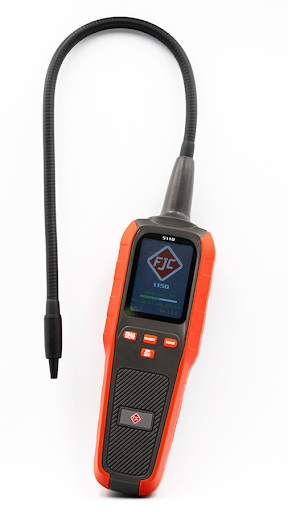
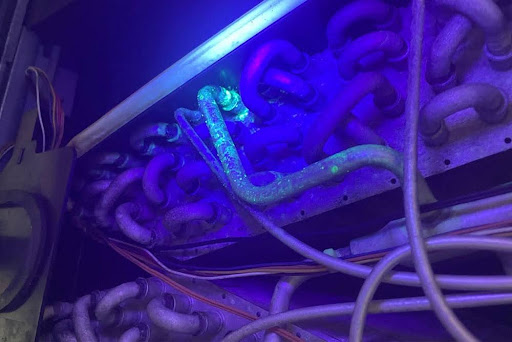
Several techniques are used on board ships to identify refrigerant leaks:
An electronic leak detector is the most common and accurate method. The sensor detects refrigerant gas escaping from joints, valves and pipelines and provides an audible or visual alarm.
A soap solution is applied to suspected leak points while the system is pressurized. If bubbles appear it indicates a refrigerant leak. This method is simple and inexpensive for locating visible leaks.
A fluorescent dye is added to the refrigeration system. Under ultraviolet (UV) light, the dye glows at the leakage point making it easier to identify small leaks.
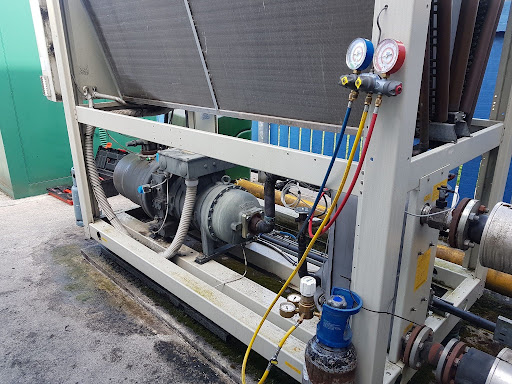
The system is charged with dry nitrogen to the recommended pressure. A pressure drop over time indicates leakage somewhere in the system.
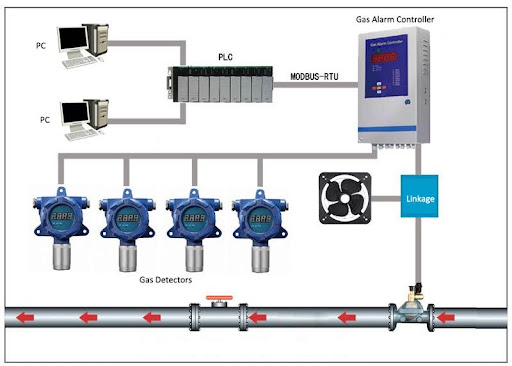
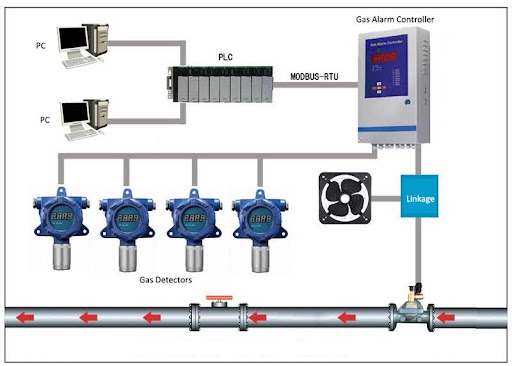
Modern ships often install fixed refrigerant gas detectors in machinery spaces. These systems continuously monitor refrigerant concentration and trigger alarms if leakage exceeds safe limits.
Steps to Handle a Refrigerant Leak
If a refrigerant leak is detected:
Effects of Refrigerant Gas Leakage
Essential Equipment for Leak Detection
Regular refrigerant leak detection provides several benefits:
To reduce the chances of refrigerant leaks:
Refrigerant gas leak detection on board is a necessary procedure. It helps to ensure the high efficiency of the system, prevent environmental damage and avoid hazardous situations. The right choice of methods and safety instructions to follow as well as regular maintenance will help keep the refrigeration system in good working order.
Using electronic leak detectors is the most accurate and the most widespread test for refrigerant leakage on board ship.
Some of the refrigerants can be decomposed by open flame, forming poisonous gases.
Loss of cooling, low suction pressure, oil and a compressor running with refrigerant leak alarm.
Yes, reduced refrigerant can lead to low cooling capacity and cause overheating of the compressor and oil deterioration.
A refrigeration system should be checked during the regular service and inspection regime and when a drop in cooling capacity or pressure is observed.
Dry nitrogen is preferred for pressure testing.
Proper ventilation reduces the risk of gas accumulation in the chamber to hazardous levels.
The system should be pressurized, evacuated using a vacuum pump, charged with the appropriate refrigerant and retested.
Disclaimer :- The opinions expressed in this article belong solely to the author and may not necessarily reflect those of Merchant Navy Decoded. We cannot guarantee the accuracy of the information provided and disclaim any responsibility for it. Data and visuals used are sourced from publicly available information and may not be authenticated by any regulatory body. Reviews and comments appearing on our blogs represent the opinions of individuals and do not necessarily reflect the views of Merchant Navy Decoded. We are not responsible for any loss or damage resulting from reliance on these reviews or comments.
Reproduction, copying, sharing, or use of the article or images in any form is strictly prohibited without prior permission from both the author and Merchant Navy Decoded.
Decoded Discount Alert! up to 50% OFF
Use Coupon Code Deep50