Hi this is Team Merchant Navy Decoded !!!

Please fill the below form with your query and we will get back to you in next 12 hours.

Rest assured your data is safe with us !!!🙂

Ask Your Query

Dual Fuel Marine Engines

The maritime industry is undergoing a major transformation as shipowners seek cleaner, more efficient propulsion systems to meet stringent environmental regulations. One of the most significant innovations in recent years is the Dual Fuel Marine Engine. Designed to operate on both conventional fuel oil and natural gas, these engines offer flexibility, improved fuel efficiency, and substantially lower emissions, making them a preferred choice for LNG carriers and modern merchant vessels.

What is a Dual Fuel Marine Engine?

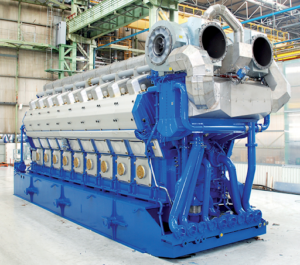
Dual Fuel Marine Engines

A dual fuel marine engine is an internal combustion engine capable of operating on two different fuels—typically Liquefied Natural Gas (LNG) and marine fuel oil. The engine can seamlessly switch between the two fuels without interrupting power output, ensuring continuous and reliable operation under varying voyage conditions.

This flexibility allows ships to use environmentally friendly natural gas during normal operations while retaining the ability to run entirely on fuel oil whenever gas is unavailable or operational conditions demand it.

Working Principle

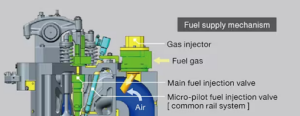
Fuel supply mechanism

During gas operation, natural gas is introduced into the engine cylinder and mixed with compressed air. Since natural gas has a high auto-ignition temperature, it requires a small quantity of pilot fuel oil to initiate combustion.

A pilot injector sprays a small amount of diesel fuel into the combustion chamber near the end of the compression stroke. The diesel ignites first due to the high temperature and pressure inside the cylinder, which then ignites the natural gas-air mixture. This process ensures efficient combustion and smooth engine performance.

Modern high-pressure dual fuel engines inject natural gas directly into the combustion chamber at pressures of approximately 250–300 bar, improving combustion efficiency and reducing knocking compared to low-pressure systems.

Table of Contents

Operating Modes

Dual fuel engines generally operate in three modes:

Gas Mode: The engine primarily runs on natural gas, with only about 5–6% pilot fuel required for ignition. This mode offers the lowest emissions and highest fuel efficiency.

Specified Gas Mode: When the available gas supply is limited, the engine receives a constant quantity of natural gas while the amount of fuel oil automatically adjusts to meet the required engine load.

Fuel Oil Mode: During manoeuvring, restricted waters, heavy weather, or whenever gas is unavailable, the engine operates entirely on conventional marine fuel oil to ensure maximum reliability and operational safety.

Key Features

Dual fuel engines incorporate several advanced safety and operational features:

  • High-pressure gas injection systems operating up to 300 bar.
  • Double-walled gas piping with continuous leak monitoring.
  • Gas valve blocks equipped with accumulators to stabilize injection pressure.
  • Sealing oil systems that prevent gas leakage around injectors.
  • Automatic gas shut-down systems upon leak detection or abnormal pressure drop.
  • Inert gas purging systems to safely remove residual gas from pipelines after shutdown.

These features ensure safe handling of natural gas, which is highly flammable and requires careful management onboard.

Safety Measures

Safety Measures

Safety is a critical aspect of dual fuel engine operation. Classification societies require several protective measures, including:

  • Starting the engine only on fuel oil.
  • Automatic changeover to fuel oil if the gas supply fails.
  • Flame arresters fitted in gas and starting air lines.
  • Independent exhaust systems designed to withstand pressure fluctuations.
  • Crankcase relief valves to prevent overpressure.
  • Manual and automatic emergency gas shut-down arrangements.

These systems minimize the risks associated with handling high-pressure natural gas while maintaining uninterrupted propulsion.

Advantages

Dual fuel engines offer numerous benefits for modern shipping:

  • Significant reduction in sulphur oxides (SOₓ), nitrogen oxides (NOₓ), and carbon dioxide (CO₂) emissions.
  • Improved fuel flexibility and operational reliability.
  • Compliance with international emission regulations.
  • Lower fuel costs when LNG is available.
  • Reduced environmental impact and enhanced sustainability.

Conclusion

Dual fuel marine engines represent a major advancement in marine propulsion technology. By combining the efficiency of conventional diesel engines with the environmental advantages of natural gas, they provide a practical solution for cleaner and more sustainable shipping. As global regulations continue to tighten and the demand for greener vessels grows, dual fuel engines are expected to play an increasingly important role in the future of the maritime industry. For marine engineers, understanding their operation, safety systems, and maintenance is essential for successfully managing the next generation of modern ships.

Frequently Asked Questions (FAQs)

A dual fuel marine engine is an engine that can operate on two different fuels, typically Liquefied Natural Gas (LNG) and marine fuel oil (MDO/MGO/HFO). It can switch between gas mode and fuel oil mode without interrupting engine operation, providing greater fuel flexibility and reliability.

Natural gas has a high auto-ignition temperature and cannot ignite by compression alone in most dual fuel engines. A small amount of pilot fuel oil (typically 5–6% of the total fuel energy) is injected near the end of the compression stroke to ignite the gas-air mixture, ensuring efficient and stable combustion.

Dual fuel marine engines offer several benefits, including lower emissions of SOₓ, NOₓ, CO₂, and particulate matter, improved fuel efficiency, compliance with IMO emission regulations, lower operating costs when LNG is available, and the flexibility to operate on either LNG or conventional marine fuel oil.

Dual fuel engines are equipped with multiple safety features such as double-walled gas piping, gas leak detection systems, automatic gas shut-down valves, inert gas purging systems, flame arresters, sealing oil systems, crankcase relief valves, and automatic changeover to fuel oil in the event of a gas supply failure. These systems ensure the safe handling of high-pressure natural gas onboard ships.

Disclaimer :- The opinions expressed in this article belong solely to the author and may not necessarily reflect those of Merchant Navy Decoded. We cannot guarantee the accuracy of the information provided and disclaim any responsibility for it. Data and visuals used are sourced from publicly available information and may not be authenticated by any regulatory body. Reviews and comments appearing on our blogs represent the opinions of individuals and do not necessarily reflect the views of Merchant Navy Decoded. We are not responsible for any loss or damage resulting from reliance on these reviews or comments.

Reproduction, copying, sharing, or use of the article or images in any form is strictly prohibited without prior permission from both the author and Merchant Navy Decoded.

DIWALI SALE

Decoded Discount Alert! up to 50% OFF

DIWALI SALE

Decoded Discount Alert! up to 50% OFF

Use Coupon Code Deep50

Days
Hours
Seconds
0
Would love your thoughts, please comment.x
()
x