Hi this is Team Merchant Navy Decoded !!!
Please fill the below form with your query and we will get back to you in next 12 hours.
Rest assured your data is safe with us !!!🙂
Ask Your Query| For Beginner | For Professional |
|---|---|
| GME | Engine Side |
| G.P. Rating | Deck Side |
| ETO | G.P. Rating |
| IMUCET & Sponsorship | Combo Offers |
| Free Course | MEO |
| Free Course |
| For Beginner | For Professional |
|---|---|
| GME | Engine Side |
| G.P. Rating | Deck Side |
| ETO | G.P. Rating |
| IMUCET & Sponsorship | Combo Offers |
| Free Course | MEO |
| Free Course |
Hydraulic systems are among the most essential power transmission systems onboard modern ships. They provide a reliable and efficient way to operate heavy machinery where electrical or mechanical systems may not be practical. From steering gears and hatch covers to cranes, winches, watertight doors, and engine control systems, hydraulics play a crucial role in ensuring safe and efficient vessel operations.
Understanding the components and working principle of a marine hydraulic system is essential for marine engineers, deck officers, and cadets preparing for competency examinations.
A hydraulic system uses pressurized hydraulic oil to transmit power from one location to another. Based on Pascal’s Law, pressure applied to an enclosed fluid is transmitted equally in all directions. This allows relatively small input forces to generate much larger output forces, making hydraulic systems ideal for heavy-duty marine applications.
Steel pipes, flexible hoses, fittings, and manifolds carry hydraulic oil throughout the vessel. Marine hydraulic pipelines are designed to withstand high pressure, vibration, corrosion, and temperature variations while minimizing leakage.

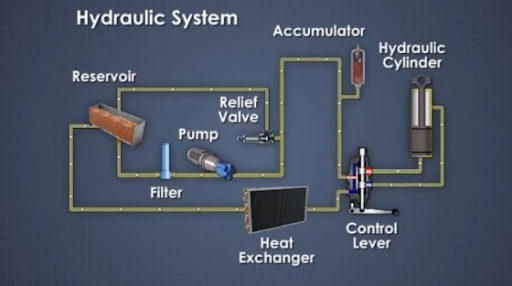
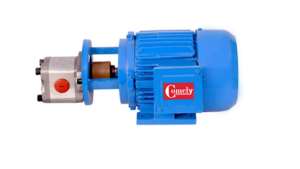
The hydraulic pump is the heart of the system. It converts mechanical energy from an electric motor or diesel engine into hydraulic energy by pressurizing the hydraulic fluid. Common marine pumps include gear pumps, vane pumps, and piston pumps depending on the required pressure and flow.
The reservoir stores hydraulic oil and allows the fluid to cool, release trapped air, and settle contaminants before recirculation. It also accommodates changes in fluid volume due to temperature variations.
Hydraulic oil serves as the medium for power transmission while also lubricating moving components, dissipating heat, preventing corrosion, and sealing internal clearances.
Control valves regulate the direction, pressure, and flow rate of hydraulic oil. They determine how hydraulic actuators operate and protect the system from excessive pressure.
Major control valves include:
Hydraulic cylinders and hydraulic motors convert hydraulic energy into mechanical movement. Cylinders provide linear motion, while motors generate rotary motion for equipment such as winches and cranes.
Steel pipes, flexible hoses, fittings, and manifolds carry hydraulic oil throughout the vessel. Marine hydraulic pipelines are designed to withstand high pressure, vibration, corrosion, and temperature variations while min
Modern vessels use Hydraulic Valve Remote Control (VRC) systems to operate cargo, ballast, fuel, and bilge valves from a centralized control room. Instead of manually operating valves throughout the ship, hydraulic actuators receive pressurized oil from a central hydraulic power unit.
The VRC system consists of:
Remote operation enhances safety by allowing crew members to control valves during emergencies without entering hazardous areas. It also reduces manpower requirements and improves operational efficiency.
The working principle is straightforward:
Throughout this process, pressure relief valves maintain safe operating pressure while filters remove contaminants to protect system components.
Marine hydraulic systems offer several advantages:
Hydraulic systems are indispensable in the maritime industry due to their ability to safely and efficiently operate heavy equipment under demanding conditions. Understanding hydraulic pumps, reservoirs, control valves, pipelines, and valve remote control systems helps marine professionals maintain equipment reliability and prevent costly failures. Regular inspection of hydraulic oil, filters, pipelines, and valves ensures long service life and safe vessel operations, making hydraulic knowledge an essential skill for every marine engineer and deck officer.
A hydraulic system is used to transmit power through pressurized hydraulic oil to operate heavy machinery efficiently. On ships, hydraulic systems are commonly used for steering gear, cargo cranes, hatch covers, winches, mooring equipment, watertight doors, stabilizers, and valve remote control (VRC) systems.
The main components of a marine hydraulic system include the hydraulic pump, hydraulic reservoir, hydraulic fluid, control valves, hydraulic cylinders or motors (actuators), pipelines and hoses, filters, pressure gauges, and safety devices. These components work together to generate, control, and transmit hydraulic power.
A Valve Remote Control (VRC) system is a hydraulically operated system that allows crew members to open and close cargo, ballast, fuel, and bilge valves from a central control station. It improves operational efficiency, reduces manual work, and enhances safety by enabling valve operation from safe locations during normal operations and emergencies.
Routine maintenance includes checking hydraulic oil levels and condition, inspecting pipelines and hoses for leaks, replacing filters, testing control valves and actuators, monitoring system pressure, and ensuring.
The converter activates alarms and sends a shutdown signal to stop the engine.
Disclaimer :- The opinions expressed in this article belong solely to the author and may not necessarily reflect those of Merchant Navy Decoded. We cannot guarantee the accuracy of the information provided and disclaim any responsibility for it. Data and visuals used are sourced from publicly available information and may not be authenticated by any regulatory body. Reviews and comments appearing on our blogs represent the opinions of individuals and do not necessarily reflect the views of Merchant Navy Decoded. We are not responsible for any loss or damage resulting from reliance on these reviews or comments.
Reproduction, copying, sharing, or use of the article or images in any form is strictly prohibited without prior permission from both the author and Merchant Navy Decoded.
Decoded Discount Alert! up to 50% OFF
Use Coupon Code Deep50