Hi this is Team Merchant Navy Decoded !!!
Please fill the below form with your query and we will get back to you in next 12 hours.
Rest assured your data is safe with us !!!🙂
Ask Your Query| For Beginner | For Professional |
|---|---|
| GME | Engine Side |
| G.P. Rating | Deck Side |
| ETO | G.P. Rating |
| IMUCET & Sponsorship | Combo Offers |
| Free Course | MEO |
| Free Course |
| For Beginner | For Professional |
|---|---|
| GME | Engine Side |
| G.P. Rating | Deck Side |
| ETO | G.P. Rating |
| IMUCET & Sponsorship | Combo Offers |
| Free Course | MEO |
| Free Course |
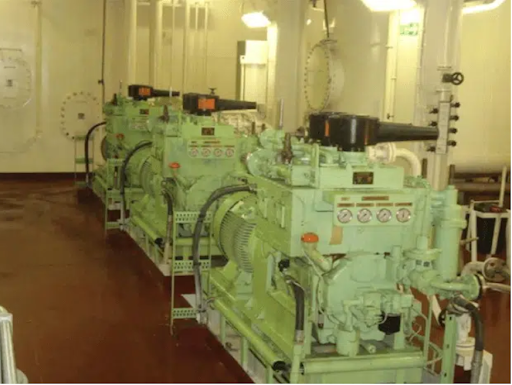
In the engine room of any merchant vessel, the marine air compressor is a critical piece of machinery. Generating pressures typically up to 30 bar for main engine starting air, these machines operate under intense thermal and mechanical stress.
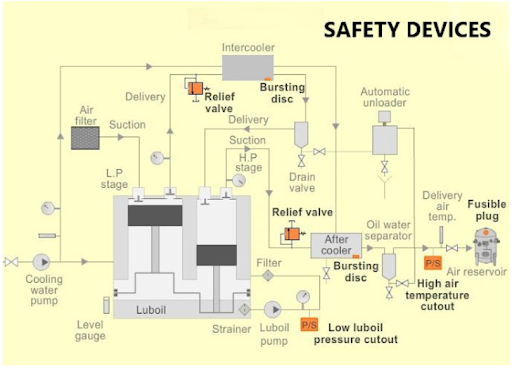
To ensure safe operation and prevent catastrophic failures, compressors are equipped with a robust network of safety cutouts, relief devices, and automated systems
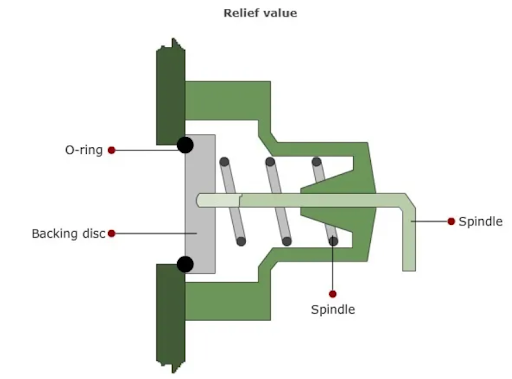
Fitted at the discharge side of the 1st stage and immediately after the 2nd stage discharge.
They protect the compressor stages from structural damage if there is any obstruction on the discharge side such as a closed isolation valve or a blocked pipeline. If pressure exceeds the safe threshold, the valve lifts to vent the excess air safely into the atmosphere.
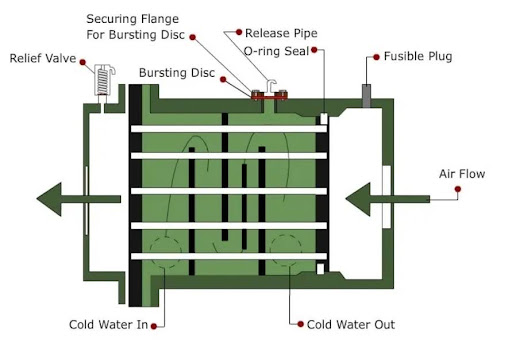
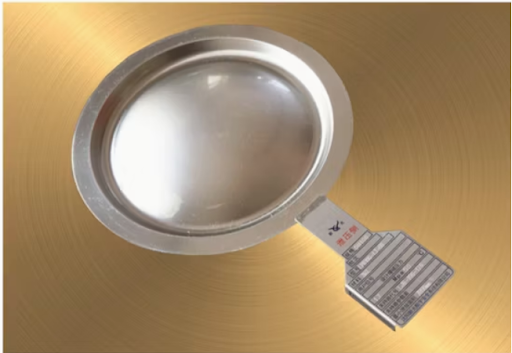
Fitted on the water jacket of the intercooler and aftercooler.
The cooling water circulating through the coolers operates at a relatively low pressure typically only 1.5 to 2 bar. If an internal cooler tube cracks or breaks, high-pressure air will rapidly flood the low-pressure water side. Without protection, this would instantly rupture the cooler casing.
The bursting disc acts as a deliberate weak point. If a tube fails, the disc ruptures instantly to release the pressure before it can destroy the cooler shell.
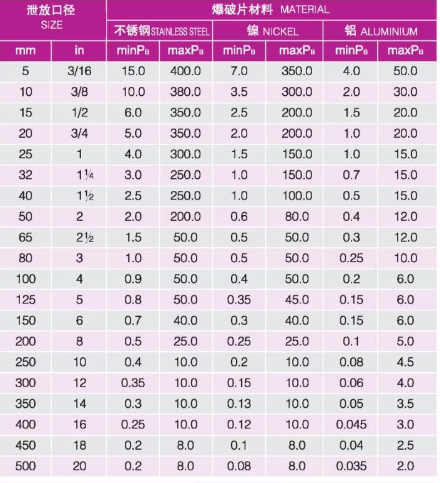
Operating pressures at the intercooler (low pressure) and aftercooler (high pressure) are vastly different. Consequently, the thickness of the bursting disc at the intercooler and aftercooler is different. During maintenance, always cross-check the disc thickness and verify it with the manufacturer’s manual. Installing the wrong disc can lead to premature failure or catastrophic overpressurization.
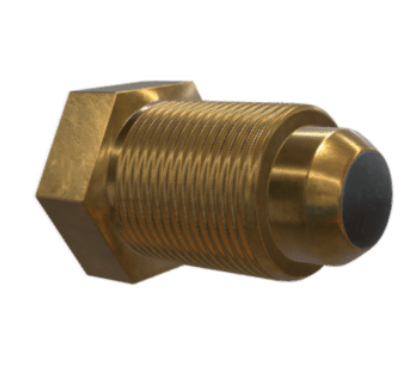
They are considered a last line of defense and are often used to avert a catastrophic failure occurring e.g. explosion. While safety valves protect machinery items from over pressure, fusible plugs protect machinery items from Over temperature.
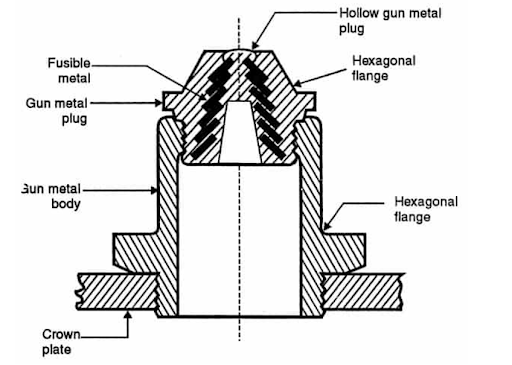
Fusible plugs contain a fusible alloy housed within a brass, bronze or gun metal threaded plug body. The material chosen for the fusible alloy has a predetermined melting point that is lower than the plug body material’s melting point. A common fusible alloy material is tin, which has a melting point of 232°C (450°F).
The fusible alloy within a fusible plug is designed to melt at a lower temperature than the surrounding plug body. If the plug is exposed to elevated temperatures, the fusible alloy will melt and a straight or tapered channel will be formed lengthwise through the plug body. The open channel allows the system pressure to vent directly to a predetermined location. For compressed air systems, this location is usually just the space surrounding the plug.
When air temperature from the compressor is high,pressure is released by melting(fusing) the metal.
It cannot be used next time(Permanent damage)
Most marine compressors utilize a shaft-driven lube oil pump to lubricate vital moving parts.
If the Pump cannot deliver enough pressure due to reasons like lube oil filter becomes choked, or if there is a pump failure, oil pressure will drop and it will be sensed with the help of a pressure switch.
If the pressure falls below 2 bar, the pump cannot develop enough hydrodynamic pressure to lubricate the cylinder liners and bearings. This rapidly leads to frictional overheating and piston seizure
Regularly testing this pressure switch is vital for machinery longevity
Compression naturally generates heat, but excessive heat indicates a failure in cooling or valve efficiency.
It is fitted at the outlet of the aftercooler,positioned directly at the final air discharge side.
It continuously monitors delivery air temperature. If the temperature exceeds the maximum safe setpoint, the switch trips the compressor motor to prevent oil carbonization and Mechanical damage of Compressor parts.
Fitted right after the aftercooler outlet.
This serves as an additional layer of redundancy. In the event that the high-temperature switch fails to react to a loss of cooling water, the no-flow sensor will detect the lack of water movement and trip the compressor before the moving parts get seized.
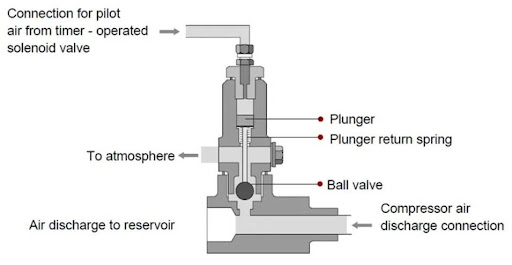
The unloader is a solenoid-operated, spring-loaded valve arrangement fitted at the end of the drain lines coming from the intercooler and aftercooler.
Purpose of Unloader
1.Restriction of starting Current in the motor,as we know the starting current is five times the rated current of the motor,it must be unloaded,to prevent the motor from being overloaded.
2.The Compressor draws air from the engine room,where air is not dry and mixed with moisture and oil,this oily mixture can damage the compressor parts like piston ,valves etc.Hence should be drained at regular intervals.
The Unloader is operated by the Compressor control panel at the starting of compressor,stopping of compressor and at intermittent phase .
Periodically opening the valve blows this accumulated oil-water condensate out of the intercooler and aftercooler stages. This prevents the liquid from migrating into the cylinders where it could cause severe mechanical damage to the pistons and valves and ensures clean, dry air is delivered to the ship’s air receivers.
If the current drawn by the motor during running or starting is very high then there is a possibility of damage to the motor.
An overload trip is thus fitted to avoid such a situation.
Disclaimer :- The opinions expressed in this article belong solely to the author and may not necessarily reflect those of Merchant Navy Decoded. We cannot guarantee the accuracy of the information provided and disclaim any responsibility for it. Data and visuals used are sourced from publicly available information and may not be authenticated by any regulatory body. Reviews and comments appearing on our blogs represent the opinions of individuals and do not necessarily reflect the views of Merchant Navy Decoded. We are not responsible for any loss or damage resulting from reliance on these reviews or comments.
Reproduction, copying, sharing, or use of the article or images in any form is strictly prohibited without prior permission from both the author and Merchant Navy Decoded.
Decoded Discount Alert! up to 50% OFF
Use Coupon Code Deep50