Hi this is Team Merchant Navy Decoded !!!

Please fill the below form with your query and we will get back to you in next 12 hours.

Rest assured your data is safe with us !!!🙂

Ask Your Query

Pressure Switch Working Principle

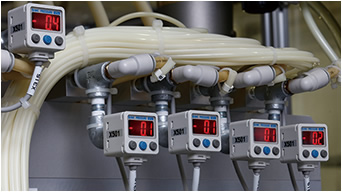
A pressure switch is an important device used in machinery systems used onboard ship to monitor and control pressure automatically. It is designed to activate or deactivate an electrical circuit whenever the pressure reaches a preset value. Pressure switches are widely used onboard ships because many machinery systems operate under controlled pressure conditions. These switches help ensure safety, automation, and smooth operation of equipment such as boilers, compressors, pumps, and hydraulic systems.

Pressure switches are preferred in marine applications due to their simple design, reliable operation, and ability to work in harsh environments. They play a vital role in protecting machinery from damage caused by abnormal pressure conditions.

Working Principle of Pressure Switch

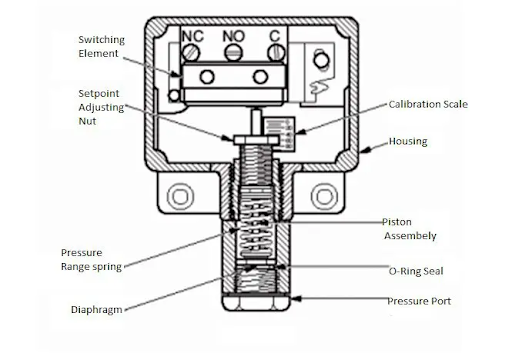
The working principle of a pressure switch is based on the movement of a sensing element caused by fluid or air pressure. The sensing element may be a diaphragm, piston, or bellows depending on the design of the switch.

When pressure enters the pressure switch through the inlet connection, it acts on the sensing element. As the pressure increases, the sensing element moves against the force of a calibrated spring. Once the pressure reaches the preset value, the movement becomes sufficient to operate an internal electrical contact mechanism.

The electrical contacts then either:

  • Open the circuit, or
  • Close the circuit

This action sends an electrical signal to the connected control system. The signal can be used to:

  • Start or stop a pump
  • Activate alarms
  • Shut down machinery
  • Control compressors
  • Operate automatic safety systems

When the pressure falls below the preset limit, the spring pushes the sensing element back to its original position, resetting the switch.


Table of Contents

Main Components of a Pressure Switch

A pressure switch mainly consists of the following parts:

  1. Pressure Receiving Part (Sensing Element): This is the component that detects changes in pressure. In the pressure switch, the pressure receiving part senses the fluid or air pressure entering through the pressure pipe connection and converts it into mechanical movement.
  2. Range Spring: The range spring provides the opposing force to the sensing element. It helps determine the pressure operating range and maintains balance within the mechanism.
  3. Electrical Contacts / Micro Switch: The micro switch contains the electrical contacts that open or close the electrical circuit when the set pressure is reached. This action is used to start, stop, or control connected equipment.
  4. Range Dial and Backlash Adjustment: The range dial and adjustment mechanism are used to set the required pressure setpoint according to system requirements. Backlash adjustment helps improve switching accuracy and performance.
  5. Housing Body (Shell): The shell or housing body is the outer protective casing of the pressure switch. It protects the internal components from dust, moisture, oil, vibration, and external damage.
  6. Mounting and Connection Parts: The mounting holes are provided for easy installation of the pressure switch, while the pressure pipe connection allows the process pressure to enter the sensing element.

Types of Pressure Switches

Pressure switches are generally classified into:

  • Mechanical pressure switches
  • Electronic pressure switches

Mechanical pressure switches are more commonly used onboard ships because of their simple and rugged construction.

Applications Onboard Ships

Pressure switches are widely used in different shipboard systems. Some important applications include:

  1. Boiler Systems: Pressure switches monitor steam pressure and activate alarms or burner controls when pressure becomes too high or too low.
  2. Air Compressors: They automatically start and stop air compressors to maintain required air pressure in air receivers.
  3. Lubricating Oil Systems: Pressure switches protect engines by giving alarms or shutdown signals if lubricating oil pressure drops below safe limits.
  4. Hydraulic Systems: Used to monitor hydraulic pressure in steering gear, cranes, and deck machinery.
  5. Cooling Water Systems: Pressure switches ensure proper water circulation pressure for safe machinery operation.

Advantages of Pressure Switches

Pressure switches offer several advantages in marine and industrial applications:

  • Simple and compact design
  • Reliable and automatic operation
  • Quick response to pressure changes
  • Low maintenance requirements
  • Improved safety of machinery
  • Suitable for harsh marine environments

Because of these benefits, pressure switches are widely used in automated ship systems.

Maintenance of Pressure Switches

To ensure proper functioning onboard ships, regular maintenance is necessary. Maintenance activities include:

  • Checking electrical connections
  • Cleaning pressure ports
  • Inspecting contact points
  • Verifying pressure settings
  • Testing alarm and shutdown functions

Routine maintenance improves reliability and prevents sudden failures.

Conclusion

Pressure switches are essential control and safety devices used in marine engineering systems. Their main function is to monitor pressure and automatically operate electrical circuits whenever pressure reaches preset values. They are widely used onboard ships in boilers, compressors, hydraulic systems, and engine protection systems.

Due to their simple construction, fast response, and reliable performance, pressure switches play an important role in ship automation and machinery safety. As modern ships continue to adopt advanced automation systems, pressure switches remain one of the most important components for efficient and safe operation.

Disclaimer :- The opinions expressed in this article belong solely to the author and may not necessarily reflect those of Merchant Navy Decoded. We cannot guarantee the accuracy of the information provided and disclaim any responsibility for it. Data and visuals used are sourced from publicly available information and may not be authenticated by any regulatory body. Reviews and comments appearing on our blogs represent the opinions of individuals and do not necessarily reflect the views of Merchant Navy Decoded. We are not responsible for any loss or damage resulting from reliance on these reviews or comments.

Reproduction, copying, sharing, or use of the article or images in any form is strictly prohibited without prior permission from both the author and Merchant Navy Decoded.

DIWALI SALE

Decoded Discount Alert! up to 50% OFF

DIWALI SALE

Decoded Discount Alert! up to 50% OFF

Use Coupon Code Deep50

Days
Hours
Seconds
0
Would love your thoughts, please comment.x
()
x