Hi this is Team Merchant Navy Decoded !!!

Please fill the below form with your query and we will get back to you in next 12 hours.

Rest assured your data is safe with us !!!🙂

Ask Your Query

Boiler Water Testing Procedures in Marine Boilers

Boiler water testing is one of the most important routine operations carried out onboard ships. Proper boiler water treatment and testing ensure efficient steam generation, prevent corrosion, avoid scale formation, and increase the life of marine boilers.

In marine engineering, untreated boiler water can cause serious problems such as:

  • Boiler tube failure
  • Scale formation
  • Corrosion
  • Priming and foaming
  • Reduced heat transfer efficiency
  • Boiler overheating

That is why marine engineers regularly test boiler water and maintain water chemistry within recommended limits.

Why Boiler Water Testing is Important

The main objectives of boiler water testing are:

  • To maintain correct boiler water chemistry
  • To prevent corrosion inside the boiler
  • To avoid scale formation
  • To detect seawater contamination
  • To control chemical dosing
  • To maintain steam purity
  • To improve boiler efficiency and safety

Proper water treatment significantly reduces maintenance costs and improves boiler reliability onboard ships.


Boiler Water Sampling Procedure

Correct sampling is extremely important for accurate test results.

Procedure for Taking Boiler Water Sample

  1. Take sample from the designated sampling point or salinometer valve.
  2. Use the sample cooler to cool water to approximately room temperature.
  3. Open the sample line and allow water to flow for some time.
  4. Flush the sample bottle thoroughly.
  5. Collect fresh flowing water sample.
  6. Avoid trapping air bubbles inside the sample bottle.

The sample should represent the actual boiler water condition. Hot samples may give incorrect readings because dissolved solids become concentrated during flashing.

Table of Contents

Main Boiler Water Tests

Marine engineers commonly perform the following tests:

  • pH test
  • P-Alkalinity test
  • Total alkalinity test
  • Chloride test
  • Phosphate test
  • Hardness test
  • Hydrazine test
  • Conductivity test
  • Dissolved oxygen test

Each test has a specific purpose in maintaining healthy boiler operation.

1. Boiler Water pH Test

 The pH test measures whether boiler water is acidic or alkaline.

Marine boilers are maintained in an alkaline condition to prevent acidic corrosion.


Typical boiler water pH range:

9.5≤pH≤11.5


Procedure

  • Take 50 ml water sample
  • Add pH reagent
  • Dip pH indicator strip
  • Compare color with chart

Interpretation

  • Low pH → Corrosion risk
  • High pH → Scale formation and caustic corrosion risk

If pH is low, alkaline chemicals such as sodium hydroxide are added.

2. P-Alkalinity Test

P-Alkalinity measures hydroxide and carbonate alkalinity in boiler water.

It helps maintain proper alkalinity for preventing corrosion and precipitating hardness salts.

Procedure

  1. Take 100 ml boiler water sample
  2. Add phenolphthalein indicator
  3. Water turns pink
  4. Add N/50 sulfuric acid until pink color disappears

Calculation

P-Alkalinity=Acid Drops×10

Importance

  • Low alkalinity → Corrosion risk
  • High alkalinity → Caustic embrittlement

Recommended control limits vary with boiler pressure and maker recommendations.

3. Total Alkalinity Test

otal alkalinity measures hydroxides, carbonates, and bicarbonates present in the boiler water.

Procedure

  • Use the same sample from P-Alkalinity test
  • Add methyl orange indicator
  • Continue adding sulfuric acid until color changes

Calculation

T-Alkalinity=Acid Drops×10

High total alkalinity may cause:

  • Carryover
  • Foaming
  • Priming

Excess alkalinity is usually controlled by boiler blowdown.

4. Chloride Test

The chloride test detects seawater contamination in the boiler system.

Since chloride salts remain dissolved inside the boiler, increasing chloride levels indicate:

  • Seawater leakage
  • Condenser leakage
  • Heat exchanger leakage

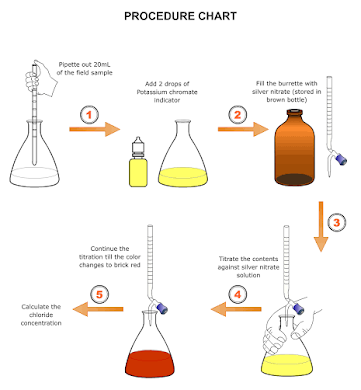
Procedure

  1. Use boiler water sample
  2. Add potassium chromate indicator
  3. Add silver nitrate solution
  4. Observe color change
  5. Interpretation

    • High chloride level → Immediate investigation required
    • Excess chlorides may cause acidic corrosion

    If chloride levels increase:

    • Carry out blowdown
    • Trace source of seawater leakage
    • Replace contaminated feed water

    Typical chloride limit:

    Cl−<240 ppm

5. Phosphate Test

Phosphate treatment prevents scale formation by converting hardness salts into soft sludge.

Purpose

  • Prevent calcium scale
  • Maintain clean boiler tubes

Procedure

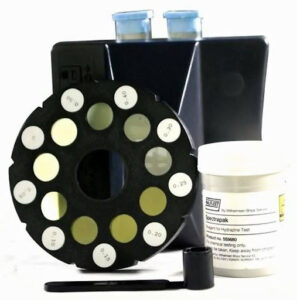
  • Add phosphate reagent to water sample
  • Compare color with comparator chart

Interpretation

  • Low phosphate → Add phosphate chemicals
  • High phosphate → Blowdown required

Minimum phosphate reserve is generally maintained around:

PO43−≥10 ppm

6. Hardness Test

Hardness indicates calcium and magnesium salts in feed water.

Hard water causes:

  • Scale formation
  • Reduced heat transfer
  • Boiler tube overheating

Procedure

  • Add hardness reagent
  • Titrate sample until color change occurs

Interpretation

  • High hardness → Increase phosphate treatment
  • Hardness should ideally be zero in boiler water

7. Conductivity Test

Conductivity measures dissolved solids present in boiler water.

High conductivity indicates:

  • Excess dissolved salts
  • Chemical over-dosing
  • Seawater contamination

Control Method

Conductivity is reduced by:

  • Surface blowdown
  • Bottom blowdown
  • Fresh feed water addition

Many marine engineers monitor conductivity daily to maintain steam purity.

8. Hydrazine and Oxygen Test

Hydrazine is used as an oxygen scavenger to prevent oxygen corrosion.

Purpose

  • Remove dissolved oxygen
  • Protect boiler tubes and condensate system

Low hydrazine reserve may indicate:

  • Poor deaeration
  • Excess oxygen ingress

Action

  • Increase hydrazine dosing
  • Check deaerator operation

Conclusion

Boiler water testing is an essential routine task for every marine engineer. Regular monitoring of pH, alkalinity, chlorides, phosphates, hardness, conductivity, and oxygen content helps maintain safe and efficient boiler operation.

Accurate testing, correct chemical dosing, and proper blowdown procedures protect marine boilers from corrosion and scale formation, ensuring reliable steam production onboard ships.

Disclaimer :- The opinions expressed in this article belong solely to the author and may not necessarily reflect those of Merchant Navy Decoded. We cannot guarantee the accuracy of the information provided and disclaim any responsibility for it. Data and visuals used are sourced from publicly available information and may not be authenticated by any regulatory body. Reviews and comments appearing on our blogs represent the opinions of individuals and do not necessarily reflect the views of Merchant Navy Decoded. We are not responsible for any loss or damage resulting from reliance on these reviews or comments.

Reproduction, copying, sharing, or use of the article or images in any form is strictly prohibited without prior permission from both the author and Merchant Navy Decoded.

DIWALI SALE

Decoded Discount Alert! up to 50% OFF

DIWALI SALE

Decoded Discount Alert! up to 50% OFF

Use Coupon Code Deep50

Days
Hours
Seconds
0
Would love your thoughts, please comment.x
()
x