Hi this is Team Merchant Navy Decoded !!!

Please fill the below form with your query and we will get back to you in next 12 hours.

Rest assured your data is safe with us !!!🙂

Ask Your Query

How to Check Ovality of a Connecting Rod in Marine Diesel Engines

In marine diesel engines, the connecting rod is one of the most highly stressed components. During every engine cycle, it transfers enormous combustion forces from the piston to the crankshaft. Over time, wear, overheating, improper lubrication, and uneven loading can distort the circular shape of the connecting rod bore. This distortion is known as ovality.

If the ovality exceeds the manufacturer’s limit, it can lead to bearing failure, abnormal vibration, overheating, crankshaft damage, and even catastrophic engine breakdown. That is why checking connecting rod ovality is an essential part of auxiliary engine and main engine maintenance onboard ships.

What is Ovality of a Connecting Rod?

Ovality is the difference between the maximum and minimum diameter measured inside the connecting rod bore. Ideally, the bore should be perfectly circular. When it becomes slightly oval due to wear or stress, the bearing clearance becomes uneven.

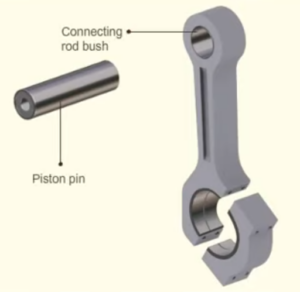
In marine engines, ovality commonly occurs at the big-end bore of the connecting rod where the crank pin bearing is fitted.


Causes of Connecting Rod Ovality

Common causes include:

  • Directional thrust on the crank pin
  • Insufficient lubrication
  • Bearing seizure
  • Engine overloading
  • Uneven cylinder loading
  • Improper tightening of connecting rod bolts
  • Overheating of bearings
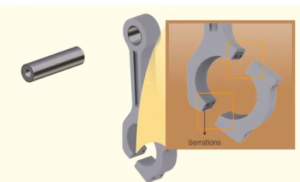
  • Fretting and corrosion at serrations


These factors gradually distort the bore from its original circular shape.


Instruments Used to Measure Ovality

The following precision instruments are commonly used:

  • Inside micrometer
  • Dial bore gauge
  • Telescopic gauge with outside micrometer
  • Vernier caliper (only for rough checking)

Among these, the inside micrometer and dial bore gauge are most commonly used onboard ships for accurate measurement.

Table of Contents

Step-by-Step Procedure to Check Connecting Rod Ovality

  1. Clean the Connecting Rod

Thoroughly clean the connecting rod and bearing cap. Remove all oil, dirt, carbon deposits, and old bearing material.

Also inspect:

  • Serration surfaces
  • Bolt seating areas
  • Fretting marks
  • Corrosion or cracks

Minor fretting can be removed using an oilstone, but severe damage requires replacement of the connecting rod.

  1. Assemble the Connecting Rod Without Bearing Shells

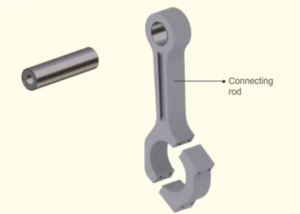
Fit the bearing cap onto the connecting rod without installing the bearing shells.

Ensure:

  • Matching marks align correctly
  • Serrations seat properly
  • No foreign particles remain between mating surfaces

This step is critical because improper seating can produce incorrect readings.

  1. Tighten the Connecting Rod Bolts


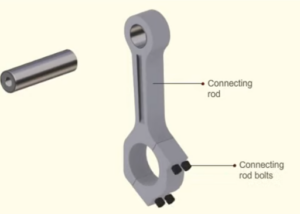
Tighten the connecting rod bolts or nuts to the manufacturer’s specified torque or hydraulic tension.

Proper tightening simulates actual operating conditions and ensures accurate bore measurement.

  1. Measure the Big-End Bore Diameter

Using an inside micrometer or dial bore gauge, measure the bore diameter at multiple locations.

Typical measurement positions include:

  • Vertical direction
  • Horizontal direction
  • 45° angle positions

Usually, five readings are taken to determine the maximum and minimum diameters.

Measurement Pattern

Take readings:

  • Near the parting faces
  • At 90° to the parting faces
  • Around the full circumference

This helps identify:

  • Ovality
  • Taper
  • Distortion
  1. Calculate Ovality

Use the formula:

Ovality=Maximum Diameter−Minimum Diameter

For example:

  • Maximum diameter = 210.05 mm
  • Minimum diameter = 210.00 mm

Then:

Ovality=210.05−210.00=0.05 mm

  1. Compare with Manufacturer’s Limit

Compare the measured ovality with the engine maker’s allowable limit.

A common marine engineering guideline states:

Maximum Allowable Ovality≤1/4×Bearing Clearance

However, always follow the engine manufacturer’s manual because limits vary between engine models.

What Happens if Ovality is Excessive?

If ovality exceeds permissible limits:

  • Bearing oil clearance becomes uneven
  • Lubrication film breaks down
  • Bearing temperature rises
  • Crank pin wear increases
  • Risk of bearing seizure rises
  • Connecting rod failure may occur

In severe cases, the connecting rod must be replaced.

Important Checks During Inspection

While checking ovality, also inspect for:

Cracks

Use:

  • Dye penetrant test
  • Magnaflux testing

Fretting

Minor fretting may be corrected with an oilstone.

Corrosion

Check serrated surfaces carefully.

Bolt Condition

Inspect connecting rod bolts for:

  • Stretching
  • Cracks
  • Thread damage

Conclusion

Checking the ovality of a connecting rod is a critical maintenance procedure in marine diesel engines. By accurately measuring the bore diameter using an inside micrometer or dial bore gauge, marine engineers can identify wear before serious damage occurs.


Regular ovality checks improve:

  • Engine reliability
  • Bearing life
  • Crankshaft protection
  • Overall engine safety


A properly calibrated and perfectly round connecting rod ensures smooth engine operation and prevents costly breakdowns at sea.

DIWALI SALE

Decoded Discount Alert! up to 50% OFF

DIWALI SALE

Decoded Discount Alert! up to 50% OFF

Use Coupon Code Deep50

Days
Hours
Seconds