Hi this is Team Merchant Navy Decoded !!!

Please fill the below form with your query and we will get back to you in next 12 hours.

Rest assured your data is safe with us !!!🙂

Ask Your Query

Emergency Generator Onboard Ship: A Complete Guide for Marine Engineers

What Is an Emergency Generator Onboard a Ship?

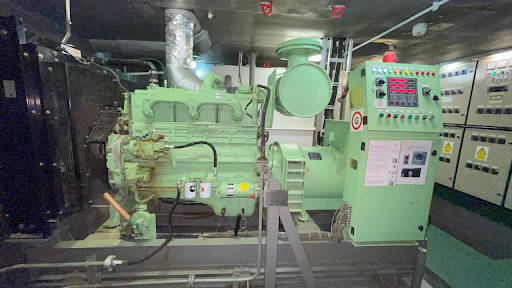
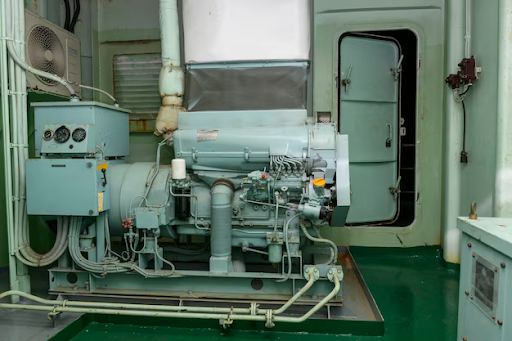
An emergency generator is a separate generator set designed to supply power to essential emergency loads when the ship’s main power source fails. It is located outside the main and auxiliary machinery spaces and is placed in a safe position so that it is unlikely to be affected by fire, flooding, or any casualty that disables the main machinery space.

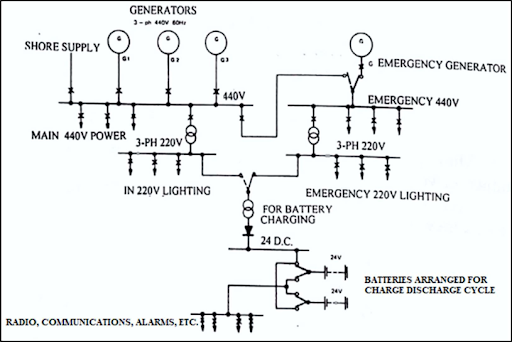
The emergency generator has its own emergency switchboard and is fitted with an independent starting arrangement. In most ships, it is arranged to start automatically when the main power supply is lost and must be capable of supplying the emergency services within 45 seconds.

Location and Installation Requirements

According to standard marine practice and SOLAS-based arrangements, the emergency generator must be installed in a separate compartment, outside the main machinery space and generally above the uppermost continuous deck. It should not be forward of the collision bulkhead.

The reason for this location is simple: if the engine room is damaged by fire, flooding, or explosion, the emergency generator must still remain operational. Its position must reduce the likelihood of common-cause failure with the main plant.

The emergency switchboard is usually installed in the same vicinity as the emergency generator. 


Table of Contents

Working Principle of the Emergency Generator

The emergency generator is designed to start automatically when the voltage or frequency of the main supply drops below a safe level or disappears completely. A start-up relay senses the failure and initiates the starting sequence.

In normal operation, the generator remains in auto mode, ready to take over at any moment. Once it starts, it must come up to speed and connect to the emergency switchboard quickly, usually within 45 seconds.

This automatic starting arrangement is essential because during a blackout, even a short delay can lead to loss of steering control, navigation hazards, or failure of critical safety equipment.

Loads Supplied by the Emergency Generator

The emergency generator supplies only essential services. These loads are divided into 440V and 220V systems depending on the ship’s design.

440V emergency loads may include:

  • Engine room fan
  • Control air compressor
  • One steering gear
  • Rescue boat winch
  • Lifeboat winch
  • MDO pump starter
  • Emergency fire pump
  • Hypermist system
  • CO2 room exhaust fan starter

220V emergency loads may include:

  • Emergency generator room fan
  • Battery charger
  • Water preheater for emergency generator cooling
  • Navigation lights
  • Signal lights
  • Accommodation emergency lights
  • Engine room emergency lights
  • Emergency batteries and related systems

A normal light and an emergency light are not the same. Emergency lights are clearly marked with a sticker and are connected to the emergency supply so they remain available during blackout conditions.

Other important emergency loads include:

  • Navigation equipment
  • Radio communication systems
  • Fire detection and alarm systems
  • Internal communication systems
  • Daylight signalling lamp
  • Ship’s whistle
  • General alarm
  • Manual fire alarm
  • Watertight doors
  • Emergency bilge pump
  • One fire pump
  • Steering gear, where applicable

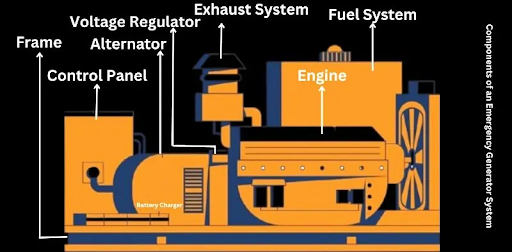
Main Components of an Emergency Generator

A marine engineer must know the parts of the system and their functions.

  1. Marine Diesel Oil (MDO) Tank

The emergency generator has its own dedicated fuel tank. The fuel level must always be maintained above the marked level so that sufficient fuel is available for 18 hours of operation on cargo ships and 36 hours on passenger ships, as required by the applicable rules.

  1. Air Filter

The combustion air passes through an air filter before entering the engine. These may be:

  • Oil bath air cleaner
  • Dry type air cleaner, such as cartridge or dust collector

A clean air filter is essential for proper combustion and reliable starting.

  1. Fuel Filters

Fuel filters remove dirt and impurities from the diesel before it reaches the engine. This protects the injection equipment and improves reliability.

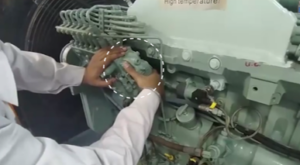
  1. Mechanical Spring Starter

If the electrical starting arrangement fails, the emergency generator may be fitted with a mechanical spring starter. This provides a manual backup method of cranking and starting the engine.

  1. Engine Sump Oil

The sump oil level must be checked regularly. Since the emergency generator remains in auto mode, it may stay unused for long periods, making routine inspection critical. The oil condition should also be monitored for contamination such as carbon or soot particles. If contamination is found, the oil must be changed.

  1. Radiator

The engine cooling system includes a radiator filled with cooling water. Proper cooling is essential for safe running once the generator is on load.

  1. Pump System

A pump system is provided to supply diesel fuel to the generator engine.

  1. Leak-Off Mechanism

If fuel leakage occurs, the fuel level in the leak-off mechanism rises and an alarm is triggered. This provides early warning of leakage or injector-related problems.

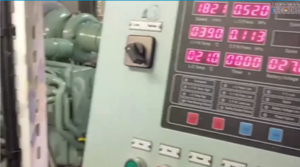
  1. Main Panel

The main panel displays vital operating parameters such as:

  • RPM
  • Lube oil pressure
  • Cooling fresh water temperature
  • Pressure
  • Lube oil temperature

These readings help the engineer confirm that the generator is functioning normally.

How to Start the Emergency Generator on a Ship

There are generally three methods of starting an emergency generator:

  1. Automatic Start

This is the normal method. When main power fails, the generator senses the blackout and starts automatically. It then connects to the emergency switchboard and takes the load.

  1. Manual Electrical Start

If automatic starting fails, the generator can be started manually from the emergency generator room. Depending on the arrangement, the selector switch may be set to the engine position or the breaker position so that the machine starts and connects to the emergency bus.

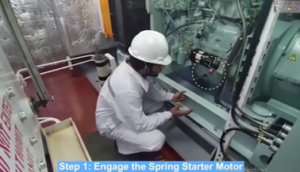
  1. Mechanical Spring Starter

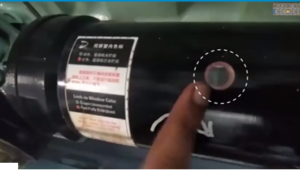
If electrical starting also fails, a mechanical starting arrangement is used. The usual sequence is:

  • Engage the spring starter motor

  • Put the fuel lever in the maximum position

  • Charge the spring starter manually until the indicator changes from green to red

  • Rotate it manually with the handle

  • Remove the handle once fully energized

  • Push the lever down to start the generator

This ensures that the generator can still be brought into service even if battery or air start systems fail.

SOLAS Requirements for Emergency Generators

The emergency generator is governed by strict safety regulations under SOLAS requirements. These standards are designed to ensure that the ship remains safe during and after a blackout.

Key requirements include:

  • The emergency source must be installed in a position unlikely to be damaged by the same incident that affects the main power source.
  • It must be capable of operating when the ship is listed up to 22.5° and trimmed up to 10°.
  • It must be located above the uppermost continuous deck, outside the main and auxiliary machinery spaces, and not forward of the collision bulkhead.
  • It must be able to start automatically and supply power within 45 seconds of blackout.
  • The fuel must have a flashpoint of not less than 43°C.
  • It must be capable of cold starting at 0°C. If required, anti-freeze treatment and heating arrangements must be provided.

For cargo ships, the emergency generator must be able to supply essential services for at least 18 hours. For passenger ships, the required duration is 36 hours.

Maintenance of Emergency Generator

Regular maintenance is essential because an emergency generator is only useful if it starts instantly when needed.

Important maintenance practices include:

  • Test run the emergency generator every Saturday
  • Keep the air bottle pressurized or starter battery fully charged
  • Change selector switch to local before starting for manual tests
  • Ensure the breaker is in the off position before starting
  • Check frequency, voltage, and current during testing
  • Maintain adequate fuel level in the tank
  • Clean the air filter regularly
  • Keep tools and spares in the emergency generator room
  • Check emergency lights regularly
  • Replace burnt-out bulbs immediately
  • Ensure batteries for emergency lights are fully charged

Routine testing proves the system is ready and also helps identify weaknesses before an actual emergency.

Conclusion

The emergency generator onboard ship is one of the most important systems in marine engineering. It provides backup power when the main electrical supply fails and ensures that the ship can maintain essential functions such as lighting, communication, navigation, steering, alarms, and fire-fighting support.

For a marine engineer, this system must never be treated casually. It must be tested, maintained, and inspected with the highest level of discipline. A properly functioning emergency generator can mean the difference between control and chaos during a blackout. In modern shipping, where safety and compliance are non-negotiable, the emergency generator remains a true lifeline at sea.

Disclaimer :- The opinions expressed in this article belong solely to the author and may not necessarily reflect those of Merchant Navy Decoded. We cannot guarantee the accuracy of the information provided and disclaim any responsibility for it. Data and visuals used are sourced from publicly available information and may not be authenticated by any regulatory body. Reviews and comments appearing on our blogs represent the opinions of individuals and do not necessarily reflect the views of Merchant Navy Decoded. We are not responsible for any loss or damage resulting from reliance on these reviews or comments.

Reproduction, copying, sharing, or use of the article or images in any form is strictly prohibited without prior permission from both the author and Merchant Navy Decoded.

DIWALI SALE

Decoded Discount Alert! up to 50% OFF

DIWALI SALE

Decoded Discount Alert! up to 50% OFF

Use Coupon Code Deep50

Days
Hours
Seconds
0
Would love your thoughts, please comment.x
()
x