Hi this is Team Merchant Navy Decoded !!!

Please fill the below form with your query and we will get back to you in next 12 hours.

Rest assured your data is safe with us !!!🙂

Ask Your Query

Crankcase Inspection of Main Engine (2-Stroke Marine Diesel Engines)

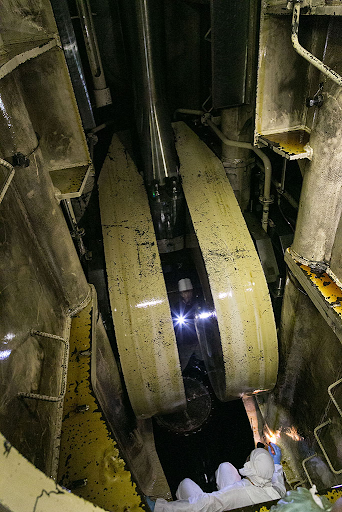
Marine Engineer performing crankcase inspection

Introduction

The crankcase is one of the most important and sensitive parts of a ship’s main engine. It contains the running gear that keeps the engine operating, including the crankshaft, connecting rod, crosshead assembly, bearings, guides, stuffing box, tie bolts, and lubrication system.

Even a small overlooked defect can lead to serious issues such as bearing damage, excessive wear, hot spots, crankcase explosion, or major engine failure. Therefore, crankcase inspection is not just routine, it is a critical preventive maintenance task that helps detect problems early before they become costly or dangerous.


What is a Crankcase?

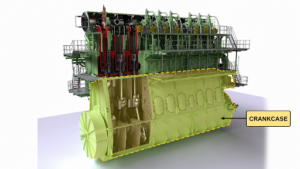
A crankcase is the enclosed space in a marine engine that houses the main moving parts such as the crankshaft, connecting rods, and bearings.

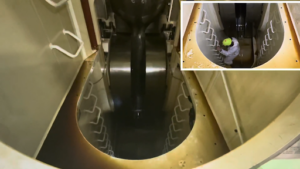
Inspection of main engine bearings and components

It acts as:

  • A protective casing for engine components
  • A support structure for the engine’s moving parts
  • A reservoir for lubricating oil, ensuring proper lubrication
 

Why Do We Carry Out Crankcase Inspection?

Crankcase inspection is carried out to ensure that none of the main engine components has become loose, worn, overheated, damaged, or contaminated during the previous voyage.

The main purpose is to detect problems early, such as:

  1. Loose bolts, nuts, and locking devices
  2. Bearing wear or wiping
  3. White metal fragments in the oil
  4. Misalignment marks or slipping marks
  5. Cracks in the frame, bedplate, or supports
  6. Stuffing box leakage
  7. Hot spots or discoloration
  8. Abnormal oil condition
  9. Sludge, debris, and metal particles inside the crankcase

Regular inspection helps prevent major failures like bearing damage, piston rod damage, connecting rod bolt failure, crankshaft issues, oil mist accumulation, and crankcase explosion.


Table of Contents

When Should Crankcase Inspection Be Carried Out?

Crankcase inspection is carried out at regular intervals, usually when the engine can be safely stopped and isolated, such as during port stay, anchorage, or scheduled maintenance periods.

  • Monthly Checks: Performed during routine monthly maintenance, typically when the vessel is in port.
  • Before Long Voyages: Conducted to ensure all running gear is in good condition before sailing.
  • Based on Running Hours: Mandatory inspections are usually carried out after approximately 1000 hours of operation.
  • After Abnormal Conditions: Inspection must be done immediately after incidents such as high bearing temperatures, unusual noises, or oil mist detection. The engine should be stopped and allowed to cool before inspection.

Safety Precautions Before Crankcase Inspection

Before any crankcase door is opened, strict safety precautions must be followed. The crankcase is an enclosed and potentially dangerous space, so every step must be controlled.


  1. Inform & Get Permission
  • Inform Chief Engineer, bridge, and duty officer.
  • If in port, notify the port authority and obtain an Enclosed Space Entry Permit where applicable. 
  1. Stop & Secure Engine
  • Shut off starting air valve, close the air bottle valve and isolate systems.
  • Open indicator cocks, engage turning gear.
  • Turn engine (~30 min) before stopping lubrication.
  • Switch OFF breakers to prevent accidental start.
  1. Shut Lubrication
  • Stop all lubricating pumps and confirm full isolation.
  1. Prepare for Entry
  • Display warning signs (“Do Not Start”, “Men at Work”).
  • Allow cooling, open crankcase, ensure ventilation.
  1. PPE & Safety Gear
  • Wear helmet, boiler suit, boots, gloves, goggles.
  • Use approved lamps and proper tools only.
  1. Entry Control
  • Maintain tool log.
  • Keep standby person outside.
  • Follow enclosed space and SMS procedures strictly.

Learn Marine Engineering Easily with MND FLIX

If you are finding it difficult to understand topics like crankcase inspection, especially while you are onboard, then MND FLIX can help you.

Click here to register and start learning with MND FLIX.

Checks to Be Carried Out During Crankcase Inspection

The inspection inside the crankcase must be systematic. It should move from one unit to the next in a logical pattern so that no area is missed.

  1. Check Lubricating Oil Condition

  • Inspect oil for color, smell, contamination, sludge, and water presence.
  • Healthy oil should be clean with no abnormal odor or degradation.
  1. Check for White Metal & Foreign Particles
  • Look for white metal fragments → indicates bearing damage.
  • Identify foreign particles or carbon deposits showing internal wear or poor cleanliness.
  1. Inspect Stuffing Box Area
  • Turn the engine to BDC if required.
  • Check for black oil leakage, indicating stuffing box failure.
  1. Inspect Piston Rod Condition
  • Check for scoring marks, roughness, and surface damage.
  • Surface condition is critical for sealing and bearing performance.
  1. Inspect Bearings Condition
  • Check main bearing, crosshead bearing, and bottom end bearing.
  • Look for:
    • Wear, discoloration, overheating
    • White metal squeezing or silvery appearance
  • Verify bearing clearances where applicable.
  1. Inspect Guides, Guide Shoes & Movement
  • Check guide and guide shoe condition for wear, cracks, or distortion.
  • Observe connecting rod movement/sliding for abnormal play or floating.
  1. Check Bolts, Nuts & Locking Arrangements
  • Inspect piston palm bolts, connecting rod bolts (top & bottom), guide shoe bolts.
  • Look for slackness, fretting, or movement.
  • Ensure all locking devices, wires, and washers are intact.
  1. Inspect Crankshaft, Web & Structural Areas
  • Verify web and journal alignment marks (no slip allowed).
  • Check web, crankpin, and stress areas for cracks or abnormal marks.
  • Inspect tie bolts and cross girder/main bearing support areas.
  1. Check Safety & Auxiliary Systems
  • Inspect crankcase relief doors (wire mesh, spring tension, sealing).
  • Check for hot spots or bluish discoloration.
  • Inspect gear/chain drive for wear and tension.
  • Ensure oil mist detector sampling pipe is clear.
  1. Final Inspection Before Closing
  • Check the oil pan area for sludge, debris, or abnormal residue.
  • Inspect crankcase door sealing condition.
  • Ensure no tools, rags, or foreign materials are left inside.
  • Physically verify complete clearance before closing.

Final Checklist Before Closing the Crankcase

Before securing the crankcase doors, ensure that:

  1. All inspections are completed
  2. No foreign material remains inside
  3. All tools are accounted
  4. Oil flow is checked after restart of pumps
  5. No leakage is visible
  6. Door sealing is in good condition
  7. The door is closed and bolted properly
  8. Uniform tightening is applied
  9. Chief engineer and duty officer are informed

Conclusion

Crankcase inspection is a preventive safety measure that helps the ship’s engineers detect wear, leakage, hot spots, loose fasteners, bearing damage, and other hidden faults before they become major failures.

A careful crankcase inspection protects:

  1. The main engine
  2. The crew
  3. The ship’s schedule
  4. The company’s maintenance budget
  5. Overall vessel safety

Disclaimer :- The opinions expressed in this article belong solely to the author and may not necessarily reflect those of Merchant Navy Decoded. We cannot guarantee the accuracy of the information provided and disclaim any responsibility for it. Data and visuals used are sourced from publicly available information and may not be authenticated by any regulatory body. Reviews and comments appearing on our blogs represent the opinions of individuals and do not necessarily reflect the views of Merchant Navy Decoded. We are not responsible for any loss or damage resulting from reliance on these reviews or comments.

Reproduction, copying, sharing, or use of the article or images in any form is strictly prohibited without prior permission from both the author and Merchant Navy Decoded.

DIWALI SALE

Decoded Discount Alert! up to 50% OFF

DIWALI SALE

Decoded Discount Alert! up to 50% OFF

Use Coupon Code Deep50

Days
Hours
Seconds
0
Would love your thoughts, please comment.x
()
x