Hi this is Team Merchant Navy Decoded !!!

Please fill the below form with your query and we will get back to you in next 12 hours.

Rest assured your data is safe with us !!!🙂

Ask Your Query

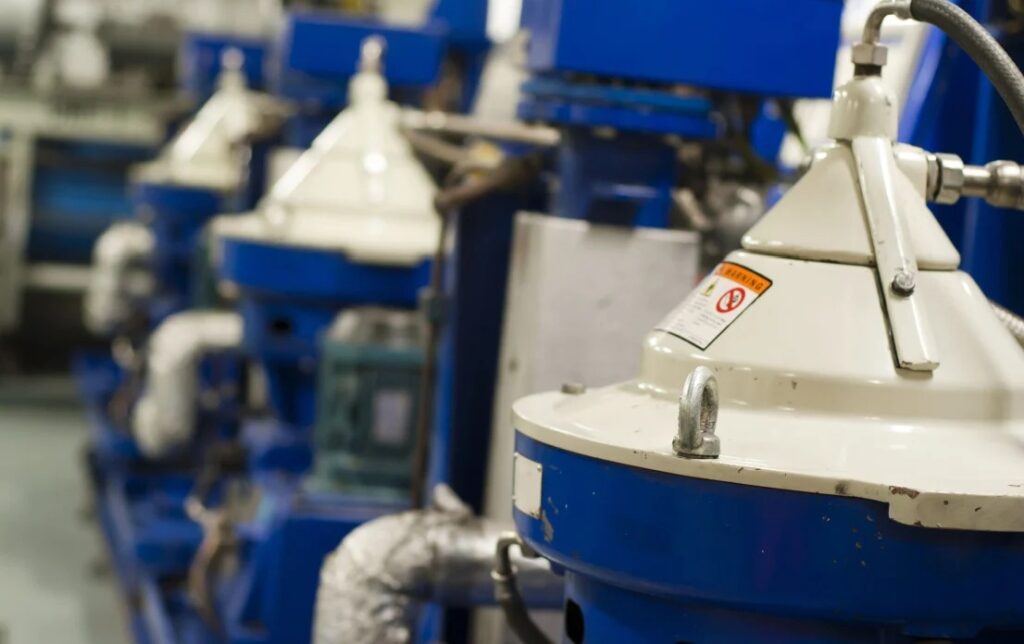
Alfa Laval Purifier

If you’ve spent even a little time in an engine room, you already know one thing: oil cleanliness is not a small issue. It affects everything.

And that’s exactly why the Alfa Laval purifier matters so much.

A lot of people memorize the definition for exams — “a centrifugal separator used to remove water and impurities from oil” — but onboard, that definition alone is useless. What actually matters is whether you understand why the purifier is running, what can go wrong, and how bad the consequences can be if it is not working properly.

Because once dirty fuel or contaminated lube oil starts moving through the system, the damage does not stay limited to one machine. It starts showing up in injectors, pumps, heaters, combustion quality, and eventually in maintenance headaches that nobody wants to deal with.

So in this guide, let’s not treat the Alfa Laval purifier like an exam answer. Let’s understand it the way a marine engineer should.

What Is an Alfa Laval Purifier?

In simple words, an Alfa Laval purifier is a machine that cleans oil.

It removes:

  • water
  • sludge
  • solid impurities

from fuel oil or lubricating oil before that oil causes trouble in the machinery system.

On paper, that sounds simple. But onboard, it plays a much bigger role. Heavy fuel oil and lube oil are never perfectly clean. They carry contaminants, and if those contaminants are not removed properly, the whole system suffers.

That is why the purifier is not just another auxiliary machine running in the background. It is one of those systems quietly protecting the engine every day.

How Does an Alfa Laval Purifier Work?

The purifier works on a very practical idea: if different substances have different densities, they can be separated by spinning them at high speed.

Inside the purifier, the bowl rotates at very high RPM. Because of this, centrifugal force is created — much stronger than normal gravity.

Now what happens?

  • heavier substances like water and sludge move outward
  • lighter oil stays closer to the center
  • clean oil is collected and discharged
  • separated water and sludge are removed

That is the core of it.

What makes the process more efficient is the disc stack inside the bowl. These discs create a large separation surface, which helps the purifier do its job faster and better.

So the purifier is not “filtering” oil in the normal sense. It is separating oil based on density using centrifugal force.

Table of Contents

Main Parts You Should Know

You do not need to make this unnecessarily complicated, but there are a few parts every marine engineer should clearly understand.

1. Bowl

This is the heart of the purifier. It rotates at high speed and carries out the actual separation.

2. Disc Stack

These are the conical discs inside the bowl. They increase the separation area and improve efficiency.

3. Gravity Disc

This is extremely important in purifier mode. It helps maintain the correct oil-water interface inside the bowl. If the wrong gravity disc is selected, separation will be poor and oil loss can happen.

4. Operating Water System

This is used for bowl opening, closing, and sludge discharge in self-cleaning purifiers.

5. Sludge Space

This is where the separated solid impurities collect before discharge.

6. Inlet and Outlet Arrangement

This controls the entry of dirty oil and discharge of clean oil, water, and sludge.

If someone asks you about these parts onboard and you only remember names without function, that is not knowledge. That is memorization. The real point is to know what each part is doing in the separation process.

Purifier Mode vs Clarifier Mode

This is one area where many trainees get confused.

Purifier Mode

In purifier mode, the machine removes:

  • water
  • solid impurities

This mode uses a gravity disc and requires proper interface control.

Clarifier Mode

In clarifier mode, the machine removes:

  • mainly solid impurities only

It does not separate water the same way purifier mode does, and it does not use a gravity disc in that arrangement.

So if someone asks the difference, don’t just say “one removes water, one does not.” Explain the practical point: purifier mode is used when water separation is required, while clarifier mode is mainly for solids.

What Conditions Matter for Good Purifier Performance?

A purifier does not perform well automatically just because it is running.

A few operating conditions matter a lot:

Oil Temperature

For fuel oil, the temperature usually has to be maintained properly so viscosity reduces and separation becomes easier. If temperature is too low, oil stays thicker and separation becomes poor.

Feed Rate

If oil enters too fast, the purifier does not get enough time to separate properly.

Back Pressure

Proper back pressure is needed to maintain stable discharge conditions.

Correct Gravity Disc

Wrong disc selection can shift the interface and cause poor purification or oil loss.

This is why purifier operation is not just “start and forget.” A good engineer pays attention to these conditions.

Common Problems Seen Onboard

Let’s be honest — most people start understanding the purifier properly only after a problem happens.

Here are some common ones:

1. Poor Separation

Sometimes the purifier is running, but the oil is still not being cleaned properly.

Possible reasons:

  • low temperature
  • wrong gravity disc
  • excessive feed rate
  • dirty disc stack

2. Excessive Oil Loss

If too much oil is going into sludge discharge, something is wrong.

Possible reasons:

  • wrong interface position
  • incorrect gravity disc
  • improper operating parameters

3. Abnormal Vibration

This usually points toward imbalance, dirt buildup, improper assembly, or bowl issues.

And this is not something to ignore. High-speed rotating equipment does not give second chances for careless handling.

4. Sludge Accumulation

If sludge discharge is not happening properly, the purifier efficiency drops and internal fouling increases.

Example 1: Low Temperature, Big Consequences

On one vessel, purifier performance had become poor, but nobody paid much attention at first because the machine was still running.

Later, repeated injector fouling started showing up.

When the system was checked properly, the issue was simple: the fuel oil temperature entering the purifier was too low. Because the oil remained too viscous, proper separation was not happening.

Once the correct temperature was restored, purifier performance improved and injector problems were reduced.

This is the kind of thing people miss. The purifier may look healthy from outside, but the separation quality can still be poor.

Example 2: Wrong Gravity Disc, Unnecessary Oil Loss

In another case, the crew noticed more oil than usual going into the sludge tank. That is never a small thing.

After inspection, the problem came down to incorrect gravity disc selection. The interface was not maintained properly, and clean oil was being lost along with discharge.

Once the correct disc was fitted and settings were checked, the oil loss dropped.

This is exactly why understanding the purifier matters. Small mistakes here become expensive mistakes very quickly.

Maintenance Matters More Than People Admit

Some signs are too important to dismiss.

  • Sudden increase in oil consumption
  • Milky or cloudy stern tube oil
  • Rising bearing temperature
  • Unusual vibration from the aft section

These are not random observations. They are early warnings that the system is moving toward failure.

Why Marine Engineers Should Take This Seriously

If you are preparing for interviews, oral exams, or onboard duties, the Alfa Laval purifier is one of those topics you cannot afford to treat casually.

Why?

Because it sits at the intersection of:

  • fuel management
  • machinery protection
  • maintenance planning
  • troubleshooting ability

And when a senior asks you about purifier problems, they are not just testing whether you know definitions. They are checking whether you understand machinery behavior.

That is the real standard onboard.

Conclusion

The Alfa Laval purifier is not just a machine that “cleans oil.” It is one of the quiet systems that protects the engine room from bigger trouble.

If it runs properly, most people do not even notice its importance. But if it starts underperforming, the effects show up across the system.

That is why every marine engineer should understand:

  • how it works
  • what affects its performance
  • what common problems look like
  • how proper maintenance prevents bigger failures

Because in the engine room, theory sounds good.
But practical understanding is what actually saves you.

Disclaimer :- The opinions expressed in this article belong solely to the author and may not necessarily reflect those of Merchant Navy Decoded. We cannot guarantee the accuracy of the information provided and disclaim any responsibility for it. Data and visuals used are sourced from publicly available information and may not be authenticated by any regulatory body. Reviews and comments appearing on our blogs represent the opinions of individuals and do not necessarily reflect the views of Merchant Navy Decoded. We are not responsible for any loss or damage resulting from reliance on these reviews or comments.

Reproduction, copying, sharing, or use of the article or images in any form is strictly prohibited without prior permission from both the author and Merchant Navy Decoded.

DIWALI SALE

Decoded Discount Alert! up to 50% OFF

DIWALI SALE

Decoded Discount Alert! up to 50% OFF

Use Coupon Code Deep50

Days
Hours
Seconds
0
Would love your thoughts, please comment.x
()
x