Hi this is Team Merchant Navy Decoded !!!

Please fill the below form with your query and we will get back to you in next 12 hours.

Rest assured your data is safe with us !!!🙂

Ask Your Query

Stern Tube Explained: Working, Types, Failures & Maintenance

Introduction

If you break a ship down to its most important moving parts, the propulsion shaft line is right at the center of it all. And sitting quietly around that shaft is one component that does far more work than most people realize — the stern tube.

On paper, it sounds simple. It is just a tube that allows the propeller shaft to pass from the engine room to the propeller outside the ship. But onboard, it is much more than that. It carries heavy loads, works continuously under stress, deals with seawater on one side and machinery on the other, and has to do all of this without leaking, overheating, or wearing out.

That is exactly why stern tube problems become expensive so quickly. A small leak or contamination issue can turn into bearing damage, pollution risk, or even an emergency dry docking.

Most cadets learn the definition and move on. Good engineers go further. They understand how the stern tube works, why it fails, what warning signs it gives, and how to keep it healthy before the problem becomes serious.

In this guide, we will break it down in a practical way.

What Is a Stern Tube?

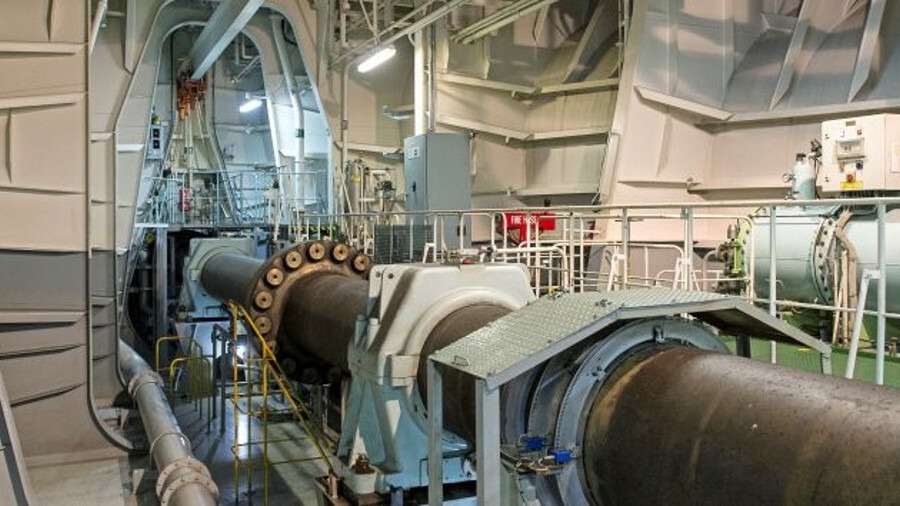
A stern tube is a cylindrical structure fitted at the aft end of the ship. The propeller shaft passes through it as it runs from the main engine side to the propeller outside the hull.

Its job is not just to “hold the shaft.” It performs several critical functions at the same time.

Main Functions of a Stern Tube

  • It supports the propeller shaft
  • It provides lubrication, either by oil or water
  • It houses the bearings and sealing arrangement
  • It prevents seawater from entering the ship’s system
  • It prevents lubricating oil from leaking out to sea

In simple words, the stern tube is the meeting point between rotating machinery and seawater. That alone should tell you why it matters.

Stern Tube Construction and Main Components

This is where many people stay vague, and that is a mistake. If you do not understand the parts, you will not understand the failures.

1. Stern Tube Bearings

The bearings support the shaft and carry the radial load created by the weight of the shaft and propeller.

Common types include:

  • White metal bearings in oil-lubricated systems
  • Rubber or composite bearings in water-lubricated systems

Their main job is to keep the shaft aligned properly and reduce friction during operation.

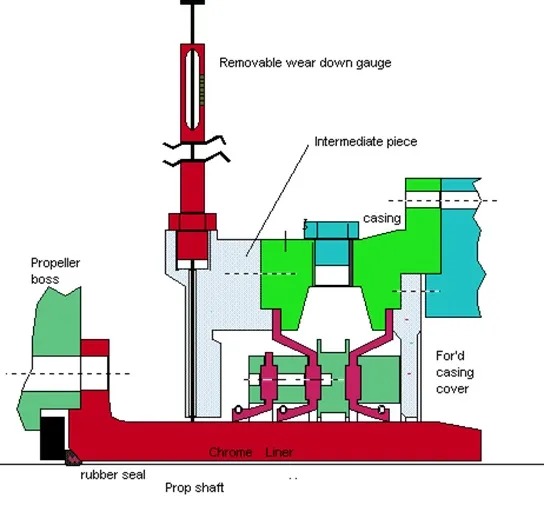
2. Stern Tube Seals

Seals are fitted at both ends of the stern tube:

  • Forward end on the engine room side
  • Aft end on the sea side

Their function is critical:

  • They stop oil from leaking into the sea
  • They prevent seawater from entering the lubrication system

A damaged seal may look like a small issue at first, but it can very quickly become a serious operational and environmental problem.

3. Lubrication System

The stern tube requires continuous lubrication to reduce friction and wear. Depending on the design, this can be:

  • Oil-lubricated
  • Water-lubricated

The type of lubrication decides the bearing design, maintenance routine, and even the type of failures you are most likely to see.

4. Propeller Shaft

The shaft passes through the stern tube and connects the propulsion system inside the ship to the propeller outside. Since it is continuously rotating under load, proper support and lubrication around it are essential.

5. Cooling Arrangement in Oil-Lubricated Systems

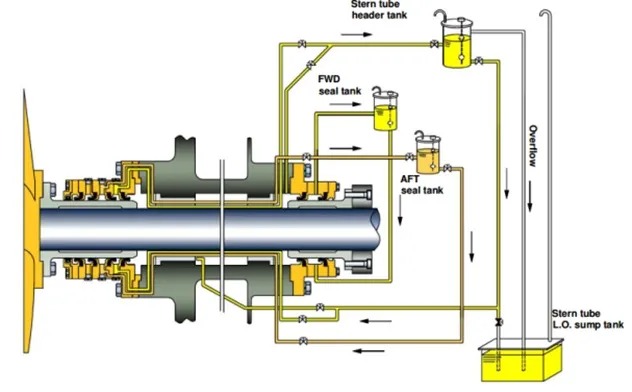
In oil-lubricated stern tubes, the oil does more than just lubricate. It also helps carry away heat generated at the bearing surfaces. In many systems, oil is circulated and cooled to maintain safe operating temperature.

Table of Contents

Types of Stern Tube Systems

There are different types of boilers, and understanding the difference matters because operation, efficiency, and maintenance can change a lot depending on the design.

1. Fire Tube Boiler

In a fire tube boiler, hot gases pass through tubes and water surrounds those tubes. Heat from the gases transfers to the water, and steam is produced.

These boilers are simpler in construction and are generally used for lower-pressure applications.

Example: Scotch marine boiler

2. Water Tube Boiler

In a water tube boiler, water flows inside the tubes and hot gases surround them from outside. These boilers are better suited for high-pressure and high-temperature steam generation.

They are more efficient and are commonly used in modern ships and power plants.

3. Auxiliary Boiler

An auxiliary boiler is used when steam is needed independently of the main engine. This is especially useful in port when the main engine is not providing exhaust heat.

4. Exhaust Gas Boiler

This type of boiler uses waste heat from the main engine exhaust gases to generate steam. It improves overall efficiency because it makes use of heat that would otherwise be lost.

Working Principle of the Stern Tube

This is the part most people oversimplify.

When the propeller shaft rotates, it is not just spinning freely in empty space. The shaft carries weight, the propeller creates load, and the bearing has to support that load continuously.

As the shaft rotates:

  • The propeller load pushes the shaft downward
  • The bearing supports the shaft
  • Lubrication forms a thin film between the shaft and the bearing
  • This film separates the surfaces and reduces friction

In a healthy system, this lubrication film is what keeps everything running smoothly.

But if that film breaks down, the story changes fast.

What happens if lubrication fails?

  • Metal-to-metal contact starts
  • Friction rises sharply
  • Heat builds up
  • Bearing damage begins

This is the real danger. Stern tube failures usually do not happen out of nowhere. They develop gradually, and the system almost always gives warning signs first.

Common Stern Tube Failures

Let’s get practical. These are the failures that matter onboard.

1. Oil Leakage to Sea

This is one of the most serious stern tube problems, especially in oil-lubricated systems.

Common causes

  • Worn or damaged seals
  • Incorrect pressure balance
  • Seal ring damage over time

Impact

  • Environmental pollution
  • Possible fines and detention
  • Reputation damage for the vessel and company

Even a slow leak should never be treated casually.

2. Water Ingress into Stern Tube Oil

This happens when seawater enters the stern tube lubrication system, usually through aft seal failure.

Common causes

  • Aft seal damage
  • Incorrect sealing pressure
  • Worn sealing surfaces

Impact

  • Oil contamination
  • Reduced lubrication quality
  • Increased risk of bearing damage

Milky or emulsified oil is often the first visible sign.

3. Bearing Overheating

When lubrication is poor or alignment is off, the bearing starts running hot.

Common causes

  • Poor lubrication
  • Shaft misalignment
  • Excessive loading

Warning signs

  • High temperature alarms
  • Discolored oil
  • Rising trend in bearing temperature

Ignoring temperature rise is asking for trouble.

4. Shaft Misalignment

Misalignment puts uneven stress on bearings and seals, leading to faster wear and vibration issues.

Common causes

  • Hull deflection
  • Improper installation
  • Foundation or alignment errors

Impact

  • Uneven bearing wear
  • Vibration
  • Seal damage
  • Reduced stern tube life


Example 1: Oil Loss on a Bulk Carrier

A bulk carrier reported stern tube oil loss of around 50 liters per day. That is not something you ignore.

Investigation found:

  • The aft seal was worn
  • The pressure difference was not set correctly

Root cause

The header tank pressure setting was incorrect, and over time this damaged the seal lip.

Action taken

  • Seal replaced during dry dock
  • Pressure system recalibrated

Lesson

Seal condition matters, but pressure management matters just as much. Many engineers focus only on the seal and miss the system behind it.

Example 2: Bearing Failure After Water Ingress

In another case, the stern tube bearing temperature kept rising gradually.

Symptoms observed

  • Oil became milky
  • Vibration increased
  • Temperature trend kept climbing

Diagnosis

Seawater was entering through the aft seal, contaminating the stern tube oil.

Result

The bearing was badly damaged and had to be replaced. The ship required emergency dry docking.

Lesson

Contaminated oil is not a minor issue. Once water enters the system, lubrication quality drops, wear increases, and the cost can escalate very fast.

Maintenance and Best Practices

This is where the difference shows between an average watchkeeper and a serious engineer.

Daily checks

  • Check oil level in the header tank
  • Monitor oil temperature
  • Watch for unusual leakage rate

Weekly checks

  • Review oil condition or oil sample results
  • Observe seal condition and leakage trend

Periodic checks

  • Verify shaft alignment where possible
  • Measure bearing wear during inspections
  • Check sealing system condition during planned maintenance

Best practices that actually matter

  • Maintain correct stern tube oil pressure against seawater pressure
  • Never ignore milky or emulsified oil
  • Track leakage as a trend, not just as a one-time reading
  • Investigate abnormal temperature rise early
  • Treat vibration as a warning, not an irritation

A lot of stern tube failures become expensive simply because early signs were noticed but not acted on.

Warning Signs You Should Never Ignore

Some signs are too important to dismiss.

  • Sudden increase in oil consumption
  • Milky or cloudy stern tube oil
  • Rising bearing temperature
  • Unusual vibration from the aft section

These are not random observations. They are early warnings that the system is moving toward failure.

Why Stern Tube Knowledge Matters

Let’s be honest. A lot of engineers treat the stern tube like a background component. It runs quietly, so nobody pays attention until something goes wrong.

That mindset is exactly why stern tube failures become serious.

If this system fails, the consequences can be major:

  • Loss of propulsion reliability
  • Costly repairs and dry dock time
  • Pollution risk and regulatory trouble
  • Operational delays and loss of confidence onboard

Understanding the stern tube properly is not about sounding technical in a viva. It is about preventing real failures on a real ship.

Why Many Engineers Find Boilers Difficult

The truth is simple: many people are trained to follow steps, not to think through the system.

They know:

  • which reading to see
  • which valve to operate
  • which alarm to acknowledge

But they do not always know:

  • why the pressure changed
  • why the water level became unstable
  • why steam demand affects boiler behavior
  • what to do when the pattern looks abnormal

That is why boiler knowledge separates an average engineer from a reliable one.

Conclusion

The stern tube may look like a passive mechanical arrangement, but in practice it is a critical reliability system. It works continuously under load, under stress, and in direct exposure to seawater conditions.

To handle it properly, an engineer must understand:

  • how the lubrication film works,
  • how seals behave,
  • how contamination starts,
  • and how small warning signs turn into major failures if ignored.

That is what separates someone who memorizes definitions from someone who can actually solve problems onboard.

Because in the engine room, the real job is not just repairing damaged parts. The real job is spotting failure early enough to stop it before it happens.

Disclaimer :- The opinions expressed in this article belong solely to the author and may not necessarily reflect those of Merchant Navy Decoded. We cannot guarantee the accuracy of the information provided and disclaim any responsibility for it. Data and visuals used are sourced from publicly available information and may not be authenticated by any regulatory body. Reviews and comments appearing on our blogs represent the opinions of individuals and do not necessarily reflect the views of Merchant Navy Decoded. We are not responsible for any loss or damage resulting from reliance on these reviews or comments.

Reproduction, copying, sharing, or use of the article or images in any form is strictly prohibited without prior permission from both the author and Merchant Navy Decoded.

DIWALI SALE

Decoded Discount Alert! up to 50% OFF

DIWALI SALE

Decoded Discount Alert! up to 50% OFF

Use Coupon Code Deep50

Days
Hours
Seconds
0
Would love your thoughts, please comment.x
()
x